
Japanese Online Store Checkout Requirements for Overseas Shoppers
For an overseas shopper, a Japanese online store checkout is ready to attempt only when every applicable account, name/address/phone, payment, billing, and verification requirement is either satisfied or not required by that store. Requirements vary by retailer, so a condition that works on one Japanese site should not be assumed to work on another, and checkout readiness does not guarantee payment authorization or order acceptance.
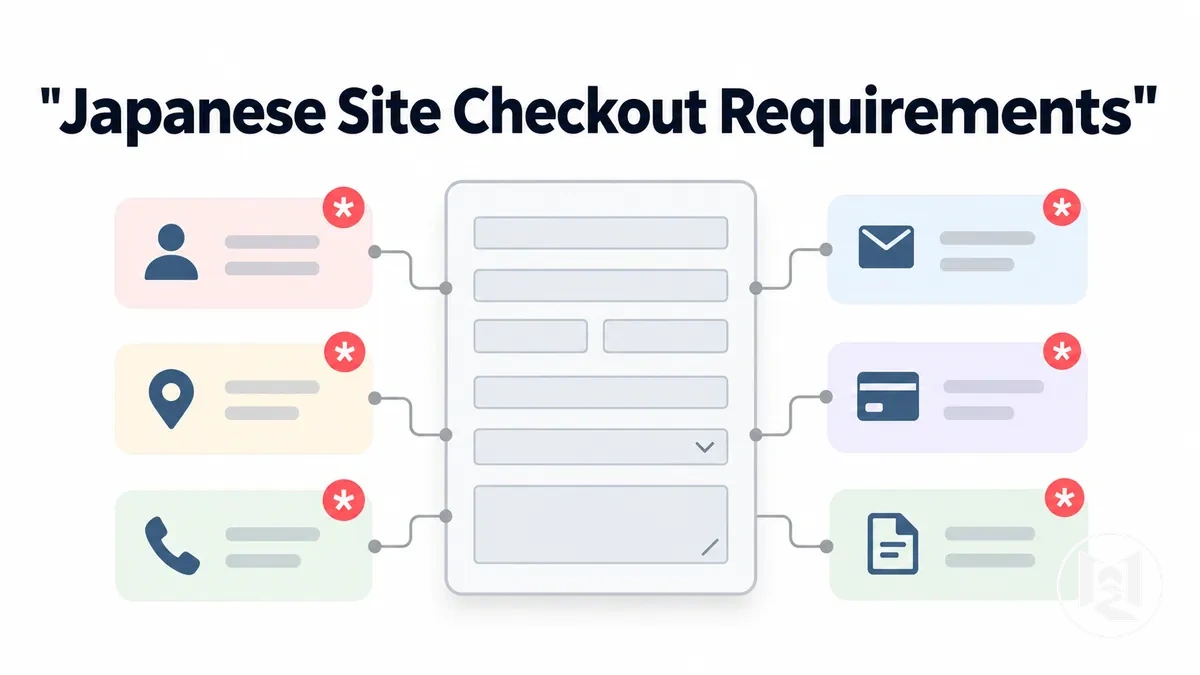
Checkout readiness verifier
Set each gate from the requirements shown by the Japanese store you are using. “Not required by this store” is a clear state; “Not confirmed” means the requirement still needs checking.
Check the store in practical order: account eligibility first when an account is required, then personal-detail fields, payment and billing compatibility, and any authentication step. Treat each condition as satisfied, unmet, not required, or not yet confirmed before attempting checkout.
Table of Contents
Account Registration and Verification Requirements
Account registration and verification requirements can determine whether an overseas shopper is eligible to proceed with a Japanese online store account before checkout.
Account eligibility is store-specific: the shopper must be able to meet the retailer's stated registration conditions and any verification conditions attached to that account.

Being able to create an account does not necessarily mean the shopper can complete every later verification step.
Registration eligibility concerns whether account creation is permitted under the store's conditions, while verification capability concerns whether the shopper can complete any required email confirmation, phone confirmation, SMS verification, residency check, or identity check.
- Account registration: Check whether the Japanese online store permits account creation under the shopper's location and customer-eligibility conditions; if those conditions can be met, account setup can proceed.
- Residency or local address: If the store states a residency restriction or requires a qualifying local address for registration, an overseas shopper who cannot meet that condition does not satisfy that registration criterion.
- Email or phone confirmation: If the store requires email confirmation or phone confirmation, the shopper must be able to receive and complete the store's stated confirmation step for the account to reach the required verification state.
- SMS verification: If SMS verification is part of the store's account process, the phone number used must be accepted by that verification flow and be capable of receiving the authentication code.
- Identity check: If the store explicitly requires an identity check, the shopper must satisfy the documentation or verification condition stated by that store; an identity requirement should not be assumed where the store does not state one.
If an overseas shopper cannot satisfy a stated account eligibility or verification condition, account setup has reached an eligibility boundary rather than a completed registration state.
The next step is to confirm the store's account-registration requirements before moving on to later checkout-field or payment validation.
Name, Address, and Phone Number Entry Requirements
Checkout fields for name, address, and phone number are separate input attributes, and each field is evaluated against the input format or condition defined by the specific Japanese online store.
For an overseas shopper, a required field reaches an accepted state only when its submitted value satisfies that field's validation rules; the illustration separates the three field categories without prescribing a universal format.
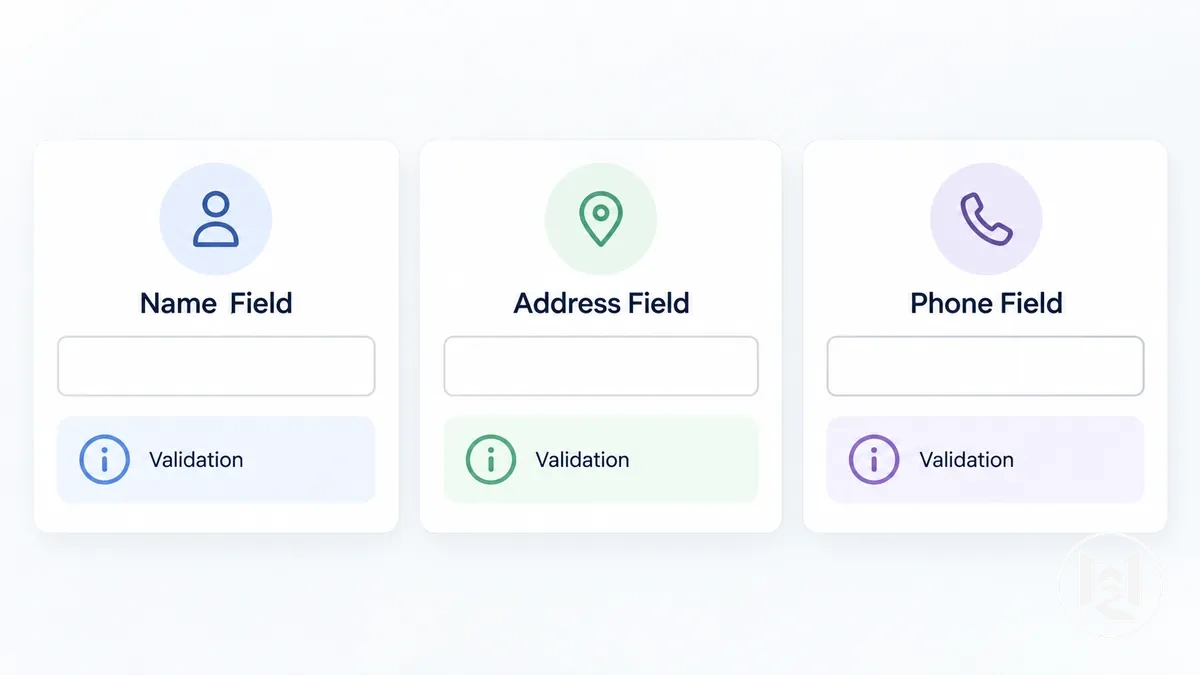
Retailers can use different field labels, character set conditions, required values, and validation behaviour, so the accepted representation for one checkout field should not be assumed for another store.
A name field may evaluate its own character or spacing condition, an address field may apply its own field structure, and a phone number field may apply a separate contact format or verification condition when the retailer specifies one.
The detailed interpretation of each input class therefore belongs to its individual field requirements rather than to a single universal Japanese checkout format.
Name Entry and Character Formats
The correct name entry depends on the specific store's name field labels and any stated character format or spacing conditions.
The illustration clarifies these field-purpose differences without implying a universal Japanese name format.
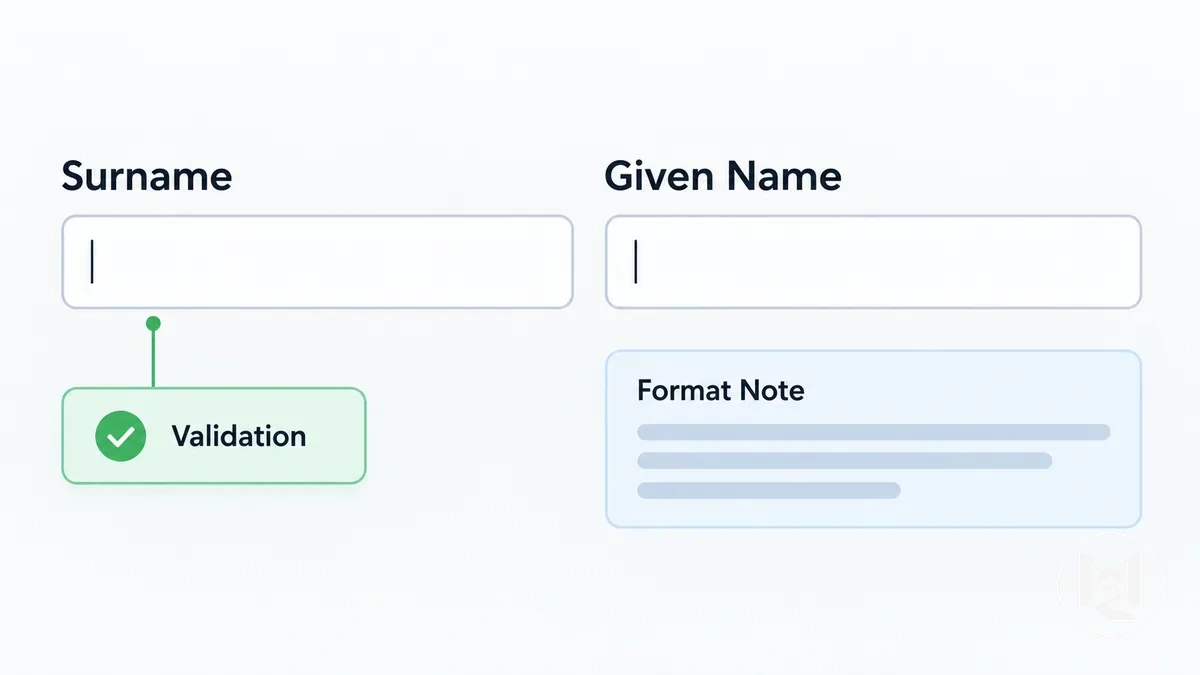
How to interpret name fields
- Surname and given-name fields
- Enter the corresponding part of the shopper’s name in the field identified for that purpose.
- Script-specific field
- Use the representation requested by the retailer’s own field label and instructions when such a field is present.
- Validation conditions
- Apply any stated character set, script, spacing, or name-order rule. The value is accepted only when it satisfies the requirement for that particular field.
Japanese Address Format and Field Structure
A Japanese checkout address field can divide an address into separate location components, including a postal code, prefecture, municipality, locality, street or block information, and building details where the form uses them.
Each address component represents a different location value, so the field structure should be interpreted from the retailer's labels rather than treated as one universal Japanese address order.
The illustration shows how these components can occupy separate parts of a checkout form without prescribing a fixed sequence.
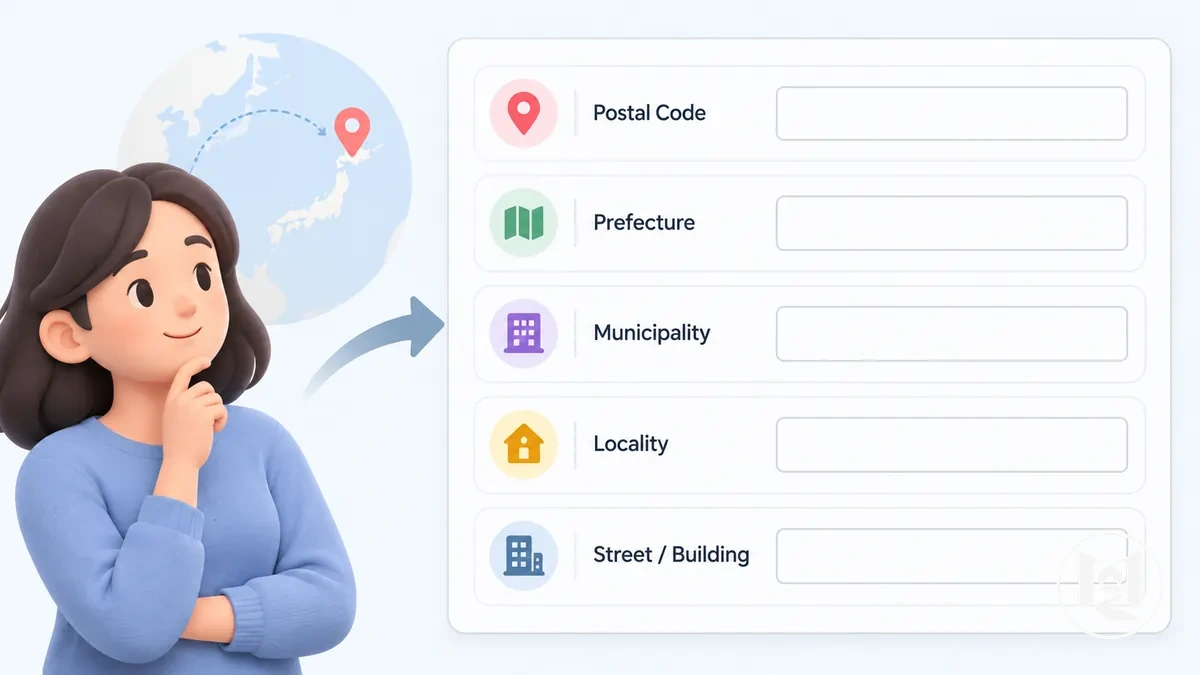
Field order, required components, formatting conditions, and acceptance of a non-Japanese address can vary by retailer, so the store's own address fields determine which values must be supplied.
The mapping below connects each supported address component to its expected value type, applicable condition, and checkout implication without assuming that every retailer uses every component.
| Address field | Expected value | Format or condition | Checkout implication |
|---|---|---|---|
| Postal code | Postal code for the entered address | Use the format accepted by the retailer's postal code field. | The component is accepted only when the value satisfies that field's validation condition. |
| Prefecture | Prefecture or corresponding regional value requested by the form | The field may limit which regional values can be entered or selected. | If the available values do not accommodate the shopper's address, that address cannot satisfy this field as presented. |
| Municipality | City, town, village, ward, or other municipality value requested by the field | Follow the municipality category indicated by the retailer's field label. | An accepted value supplies the municipality component required by that form. |
| Locality | Subarea or locality value requested by the form | The retailer may provide a separate locality field or combine this information with another address field. | The value must fit the component structure used by that checkout form. |
| Street or block | Street, block, house, or comparable detailed location information requested by the field | Enter the detail according to the segmentation and format shown by the retailer. | The entry supplies the more specific location component when that field is part of the form. |
| Building | Building name, building number, unit, or other building detail requested by the form | Provide building information only according to the field presented and its stated condition. | The value completes the building-level component where the retailer's field structure uses one. |
Japanese Phone Number Requirements
A phone field can serve different functions: it may collect a contact number, impose an eligibility condition, or support phone-based verification.
For an overseas shopper, the checkout implication therefore depends on the store requirement attached to that field rather than on an assumption that every retailer requires a Japanese phone number.
The illustration distinguishes these phone-field functions without prescribing a universal format.
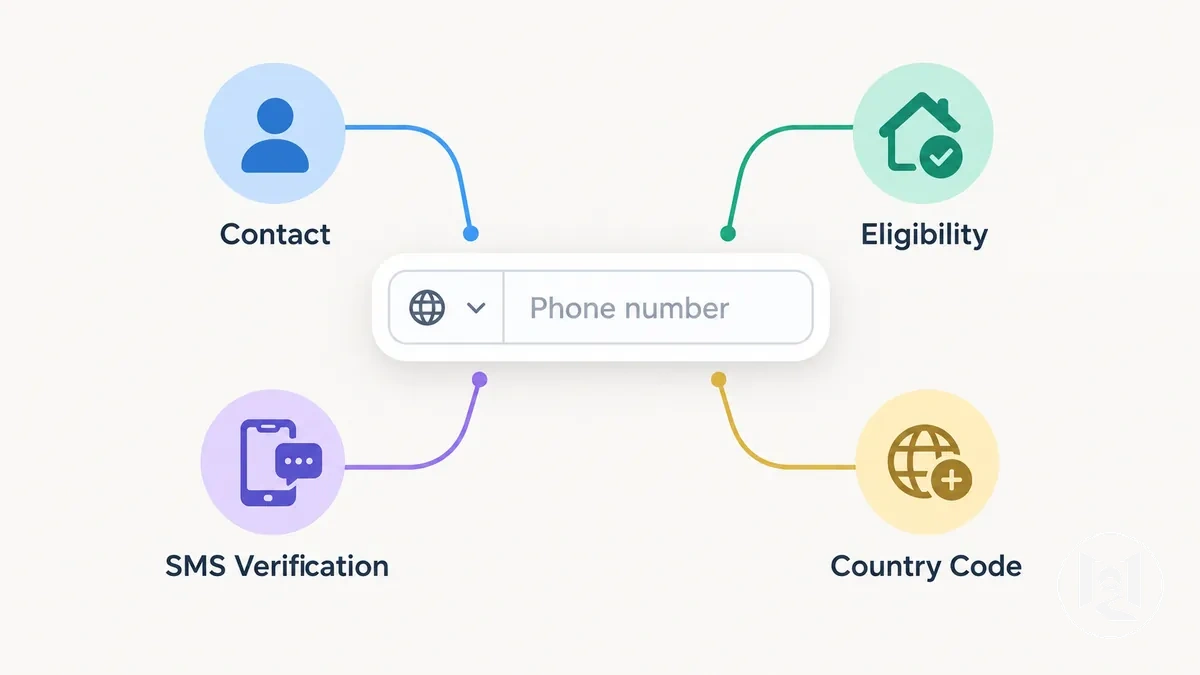
- Contact number: If the phone field is used only for contact information, the relevant condition is whether the retailer accepts the submitted number format, including any country code treatment specified by the form.
- Domestic-number eligibility: If the store requirement explicitly limits the field to a Japanese phone number or another domestic-number condition, a number outside that accepted condition does not satisfy the field's eligibility requirement.
- SMS verification: If the phone field is used for SMS verification, the mobile number must be accepted by the store's verification system and be capable of receiving the authentication code for that verification state to be completed.
- Formatting condition: If the retailer specifies a particular telephone-number format, country code rule, or validation pattern, the submitted value must match that stated condition for the phone field to be accepted.
A contact number accepted for ordinary communication does not necessarily satisfy a separate authentication requirement.
Country code handling, domestic-number restrictions, format rules, and SMS capability should be evaluated only when the retailer documents those conditions.
The valid phone entry is therefore the one that satisfies the specific store requirement for that field, whether the function is contact, eligibility, or verification.
Payment and Billing Requirements
Payment and billing requirements should be checked across separate criteria: whether the merchant offers the payment method, whether the required billing information is compatible with the checkout, whether card origin matters under the merchant or payment processor conditions, and whether authentication can be completed.
These checks determine whether an available payment option satisfies the required billing or authentication state and can proceed through checkout.
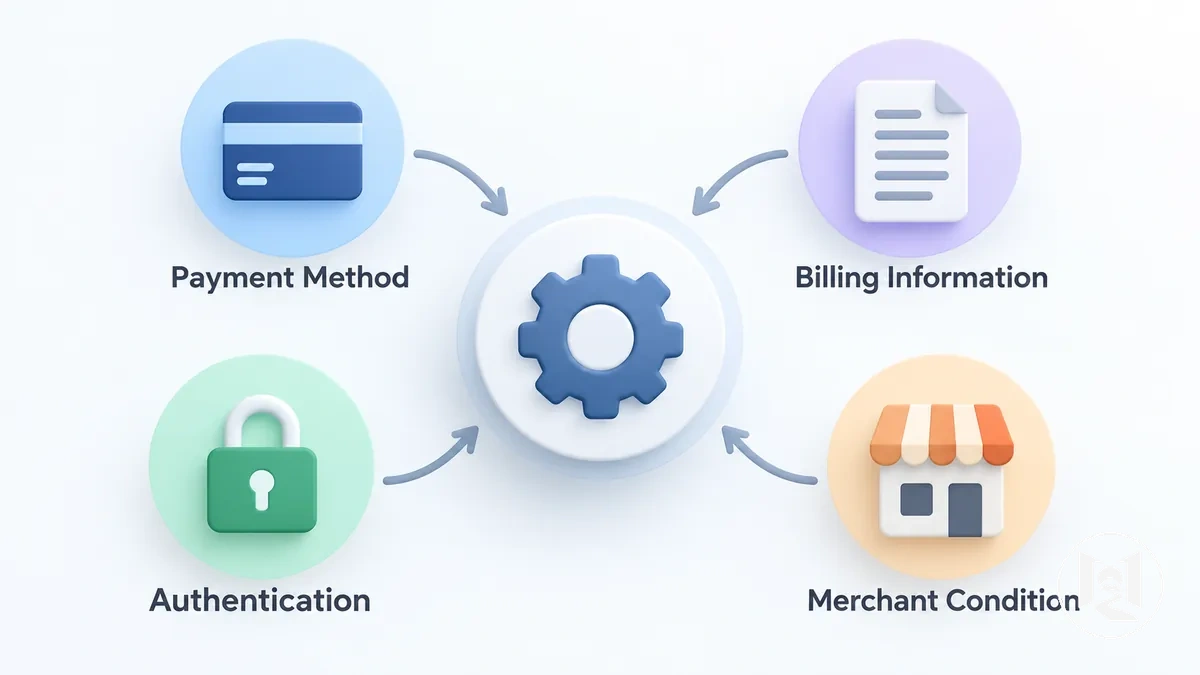
A displayed payment method does not by itself mean that authorization will be completed, because merchant, payment processor, card network, or issuer conditions may still apply.
Billing information must satisfy the conditions associated with that payment option, while any required authentication must also be completed for the payment attempt to proceed.
Card origin and other card-specific acceptance conditions should therefore be evaluated only where the retailer or payment provider states them, before moving to the detailed card-acceptance and verification requirements.
Foreign-Issued Credit Card Acceptance
A foreign-issued credit card may be usable on a Japanese store only when the merchant, payment processor, card network, issuer, and any required authentication conditions permit the transaction.
Meeting one of these conditions does not establish that the remaining acceptance conditions are also satisfied.
Card acceptance therefore involves several independent checks between the card and the store's payment path.
Each check should be evaluated by its supported state and its implication for whether checkout can continue.
- Merchant and payment processor support: The foreign-issued credit card must be supported under the merchant's and payment processor's stated payment conditions; if foreign-issued cards are excluded by either condition, the card does not meet this acceptance criterion.
- Card network support: The card network must be one the merchant and processor support for the transaction, but a supported network alone does not establish final authorization.
- Card origin or issuer condition: If the store or processor states a restriction based on issuer country or card origin, the card must fall within the supported state for that condition; no universal issuer-country restriction should be assumed where none is documented.
- 3-D Secure authentication: If 3-D Secure or another authentication step is required, the cardholder must be able to complete that authentication successfully for the transaction to advance beyond that check.
- Cardholder data: Where the payment flow verifies cardholder data, the submitted information must satisfy the merchant or processor's stated matching condition before the payment can proceed.
- Issuer authorization: After the preceding conditions are met, the issuer must still authorize the transaction; completion of network support or authentication does not by itself guarantee authorization.
Passing one criterion does not guarantee that a foreign-issued credit card will complete payment because another merchant, processor, authentication, data-matching, or issuer condition may still prevent authorization.
There is no universal rule that Japanese websites accept or reject foreign-issued cards; the specific store and payment-provider conditions determine whether a card is eligible to proceed through that checkout.
If those requirements appear satisfied but the payment still fails, determining the failure reason belongs to payment troubleshooting rather than this acceptance check.
Billing Information and Payment Verification
Billing information is payment-side data such as the cardholder name, billing address, and country, while shipping information identifies where an order is to be delivered; the two should not be treated as interchangeable unless the checkout explicitly links them.
Payment verification checks whether the required billing data and any authentication state satisfy the store, payment processor, or issuer conditions, so the checklist verifies data consistency and required verification states rather than guaranteeing authorization.
- Cardholder name: If the checkout or payment provider states a name-matching requirement, the submitted cardholder name passes when it satisfies that stated data match; a mismatch fails that condition and can prevent the payment from proceeding.
- Billing address and country: If the billing address or country is checked, the submitted value passes when it satisfies the retailer's, processor's, or issuer's stated condition; an exact-match rule should not be assumed where the requirement is not documented.
- Billing and shipping information: If separate billing information is required, the payment-side fields must contain the billing data requested by the checkout; shipping information alone does not satisfy separate billing fields unless the checkout explicitly reuses it.
- Security verification and authentication: If the payment processor or issuer requires an authentication or security-verification step, the check passes when that required state is completed or accepted; an incomplete or failed state leaves the payment verification condition unmet.
A check passes only when the specific value or authentication state required by that retailer, payment processor, or issuer is satisfied; otherwise that verification condition remains unmet and checkout may not proceed.
Data-match rules and authentication requirements remain store-, processor-, or issuer-specific and should be applied only where they are documented.
Completing the stated billing and authentication checks establishes compliance with those verification conditions, but it does not by itself guarantee issuer authorization.
How to Check Your Checkout Readiness Before Ordering
Checkout readiness means confirming the store-specific prerequisites that apply before attempting ordering, including account eligibility, verification access, compatible checkout details, payment and billing conditions, and any required authentication.
A ready state means those prerequisites have been checked and the shopper can satisfy the conditions identified by that store, not that the order itself is guaranteed to be accepted.
The pre-check consolidates the earlier requirements without replacing the ordering process.
Verify the conditions in practical order, moving from account access and personal details to payment, authentication, and the final readiness state so that an unmet prerequisite is identified before a direct checkout attempt.
- Account eligibility and verification access: Confirm that the account can meet the store's eligibility conditions and that any required verification step can be completed. If either condition remains unmet, direct checkout is not ready to proceed.
- Name, address, and phone compatibility: Confirm that the name, address, and phone details can satisfy the field structure, format, and other conditions stated by the store. If a required field cannot be completed in an accepted state, the readiness check fails at that prerequisite.
- Payment method and billing: Confirm that an available payment method can meet the store's applicable payment and billing conditions. If the payment option or required billing information does not satisfy those conditions, the checkout attempt is not ready.
- Authentication: Confirm that any authentication required for the account or payment can be completed using the available verification access. If a required authentication state cannot be reached, the shopper has an unmet checkout prerequisite.
- Final readiness state: Treat the direct checkout attempt as ready only when all store requirements identified in the pre-check are satisfied. Any remaining unmet condition means the direct ordering path is not yet ready.
When the required conditions are satisfied, the shopper can proceed to ordering while recognising that readiness does not guarantee final payment authorization or order fulfillment.
If a store requirement remains unmet, the direct checkout attempt should be treated as not ready rather than as a condition that can be bypassed.
In that case, a different ordering path may need to be considered without assuming that any alternative will satisfy the retailer's requirements.