Why Japanese Online Stores May Not Fulfil Direct Overseas Orders
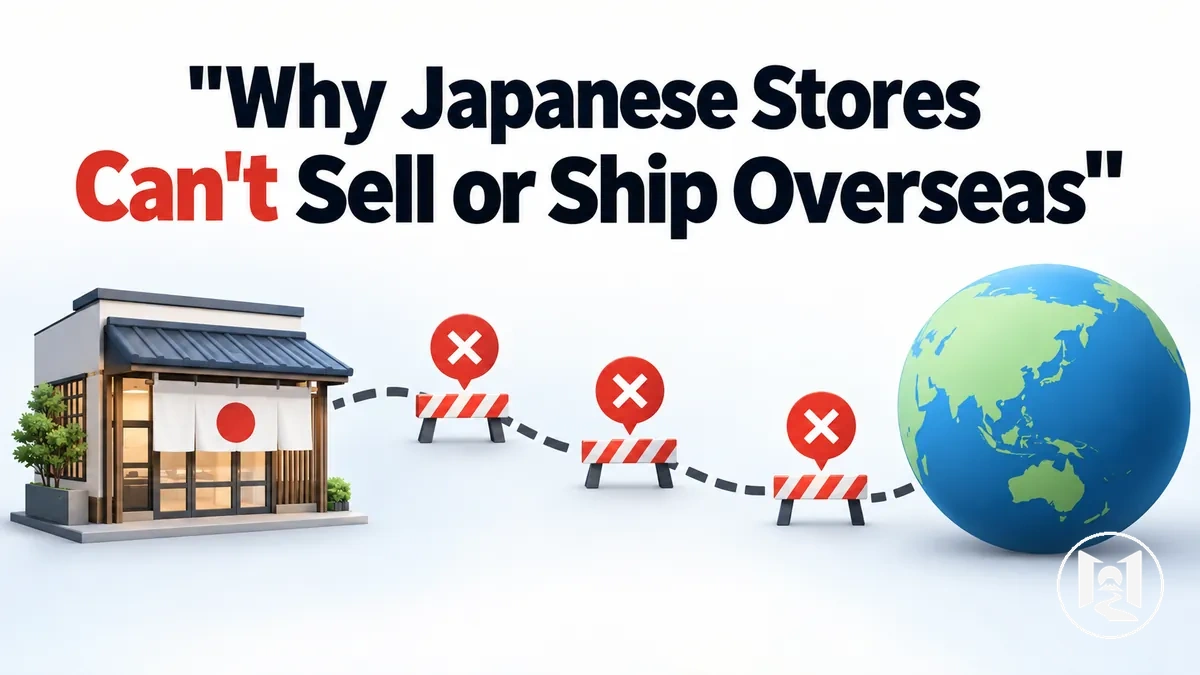
A Japanese online store may not fulfil a direct overseas order when its sales or fulfilment territory is limited to Japan, required customer details cannot be validated, no eligible international shipping service covers the destination and order conditions, or the specific product is restricted. The checkout signal narrows the likely restriction layer but does not prove a single cause, so diagnose the failure by what the store is validating when the problem appears.
Direct-order diagnostic
Match the restriction layer to the signal and next check
Start with the condition that repeats under the same ordering circumstances. A signal is useful for diagnosis, but the same visible failure can come from more than one underlying restriction.
Store policy
Typical state
Sales or fulfilment is limited to Japan.
Common signal
Overseas ordering remains unavailable broadly across relevant items or destinations.
Next check
Look for an explicit sales, delivery, or fulfilment-territory rule and whether the restriction persists across the store.
Customer requirements
Typical state
A required address, telephone, account, or verification value is not accepted.
Common signal
Registration or checkout requires Japanese-format customer details.
Next check
Distinguish a structurally mandatory domestic field from a correctable input or validation error.
Shipping or destination
Typical state
No eligible international service covers the destination, route, parcel, or current order conditions.
Common signal
The country is unavailable or checkout offers no usable international shipping service.
Next check
Compare destination coverage, route or carrier availability, parcel limits, and any temporary service suspension.
Product restriction
Typical state
The item-destination-service combination is ineligible even though other products may still ship internationally.
Common signal
A particular item cannot be shipped to the selected country.
Next check
Check product classification, import or export conditions, carrier rules, and packed size or weight limits.
Post-submission rejection is broader: payment validation, customer verification, inventory, or shipping feasibility can cancel an order without establishing a store-wide overseas-sales restriction.
The sections below separate these restriction layers, then show how to interpret the stage at which a direct overseas order becomes ineligible.
Table of Contents⌄
The Main Causes of Direct Overseas Order Restrictions
Direct overseas order restrictions can arise from different conditions within a Japanese store's sales policy, customer requirements, shipping arrangements, or product eligibility.
These causes are distinct but can overlap, so one direct overseas order may be affected by more than one restriction.
The four main cause classes separate store-controlled restrictions from customer-data, shipping or destination, and product-level conditions.
Each class affects fulfilment eligibility at a different part of the transaction.
Store policy: A domestic-only policy can limit the permitted sales territory or fulfilment territory to Japan, making a direct overseas order ineligible under the store's own sales conditions.
Customer requirements: Required customer details, such as an accepted delivery address, telephone format, account information, or other mandatory data, can prevent the order from meeting registration or checkout conditions when the required values cannot be supplied.
Shipping service or destination: Direct fulfilment can be unavailable when the store has no eligible international shipping service for the destination, route, or order conditions, creating a destination restriction even if the store supports international orders elsewhere.
Product restriction: A particular product can be ineligible for the available international route because its characteristics or an applicable carrier rule do not satisfy the shipping conditions, while other products from the same store may remain eligible.
These causes can coexist, and the first restriction encountered during ordering does not necessarily represent the only underlying limitation.
A visible obstacle therefore identifies a condition affecting fulfilment eligibility without, by itself, establishing every cause affecting the order.
Domestic-Only Sales and Fulfilment Policies
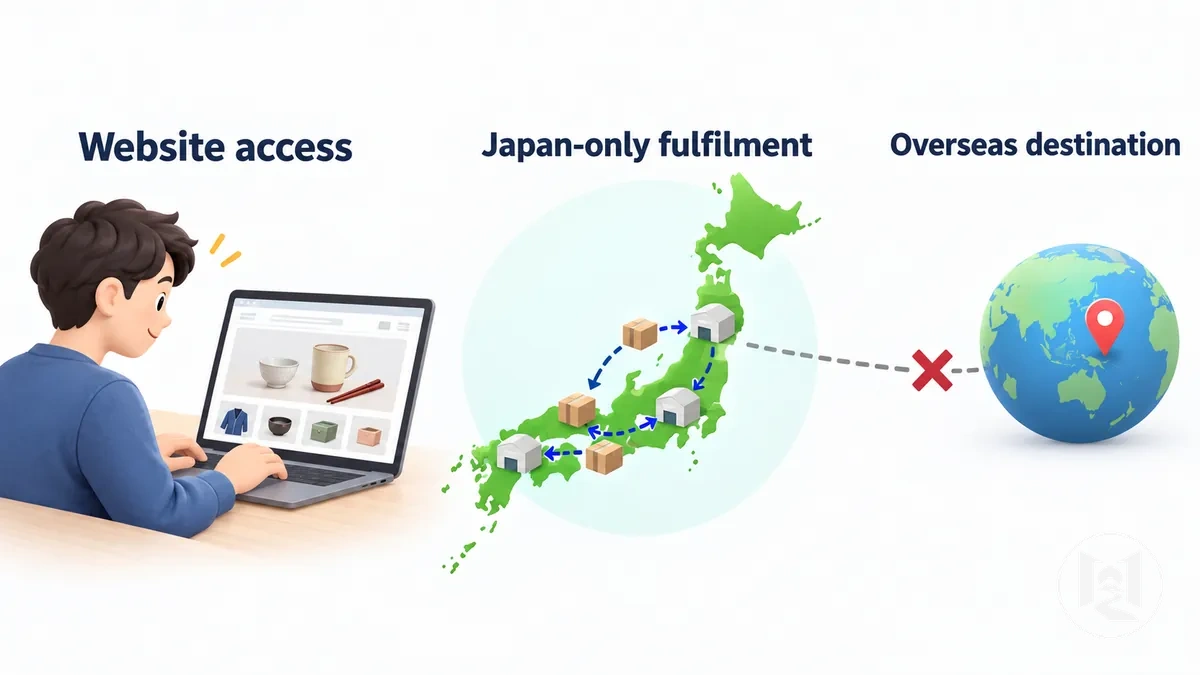
A Japanese store can remain accessible to an overseas customer while operating under a domestic-only policy that limits its sales territory or fulfilment territory to Japan.
Website access does not establish direct-order eligibility. A store can be reachable overseas while its sales or fulfilment territory remains limited to Japan.
Two store-level boundaries
Sales territory
The store accepts orders only within Japan, so a direct overseas purchase is ineligible under the sales policy.
Fulfilment territory
The store limits delivery or customer servicing to supported domestic locations even when the website is accessible overseas.
Both are store-level conditions: their effect can apply across the store or relevant sales channel rather than arising from one item's characteristics.
This differs from product-specific shipping eligibility, where a particular item may be restricted even though the store otherwise permits overseas sales or fulfilment.
Japanese Address and Customer-Detail Requirements
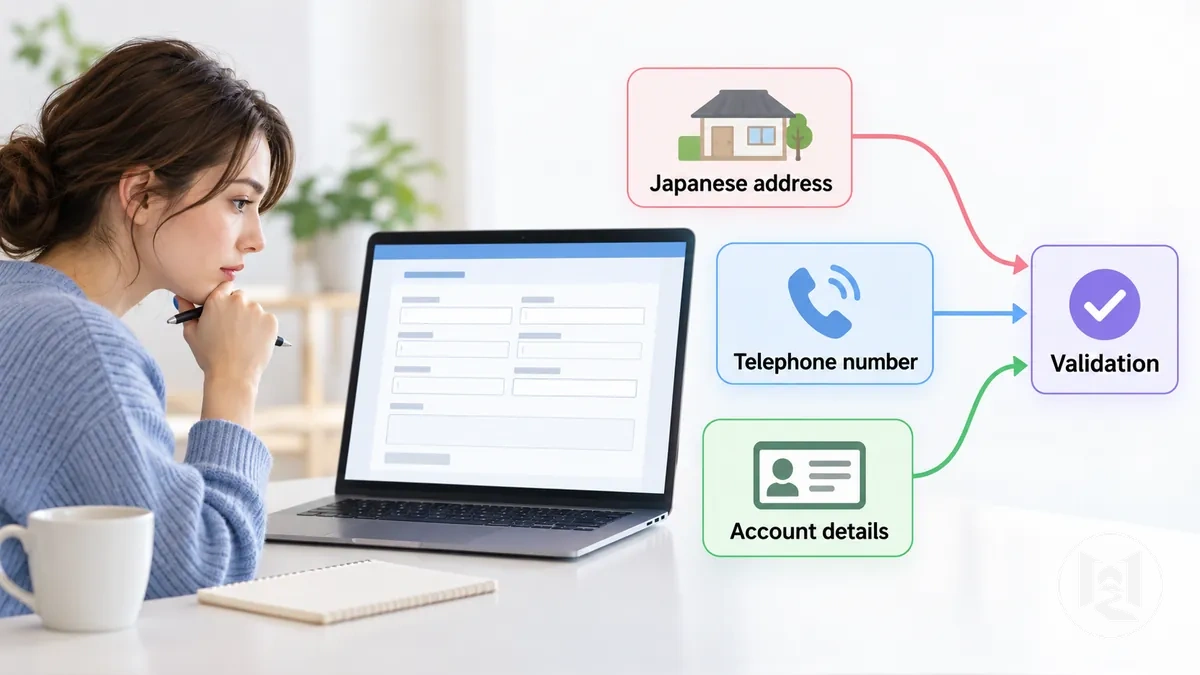
Mandatory Japanese-format customer details can prevent an overseas shopper from completing a direct order when a required field cannot be supplied in the state or format accepted by the store.
The restriction may affect account registration, checkout validation, or fulfilment eligibility rather than international shipping itself.
Different customer details can validate different parts of account or order eligibility.
The relevant condition is whether the store requires that information and whether the submitted value satisfies its validation rules.
Japanese address: If a Japanese delivery address is a mandatory required field, an overseas address that the form does not accept can prevent checkout or make the order ineligible for direct fulfilment.
Telephone number: If the store requires a domestic-format telephone number, a number that does not match the accepted format can fail validation and prevent account registration or checkout from continuing.
Account or identity details: If account registration requires specified local customer details or verification information, fulfilment eligibility can depend on supplying those required values successfully.
Other mandatory local fields: Additional store-specific customer information can block the order when the field is compulsory and the shopper cannot provide an accepted value or format.
These customer-detail requirements vary by Japanese store, so the presence of one domestic requirement does not establish that every store uses the same validation rules.
A customer-information restriction should also be distinguished from a separate shipping-service, destination, or product restriction, which can affect fulfilment even after the required customer details have been accepted.
Destination and International Shipping Service Limitations
A Japanese store can support international shipping yet still be unable to fulfil a direct order to a particular destination when no eligible international shipping service is available for that country or region.
Fulfilment eligibility therefore depends on both destination coverage and the shipping services available for the specific order.
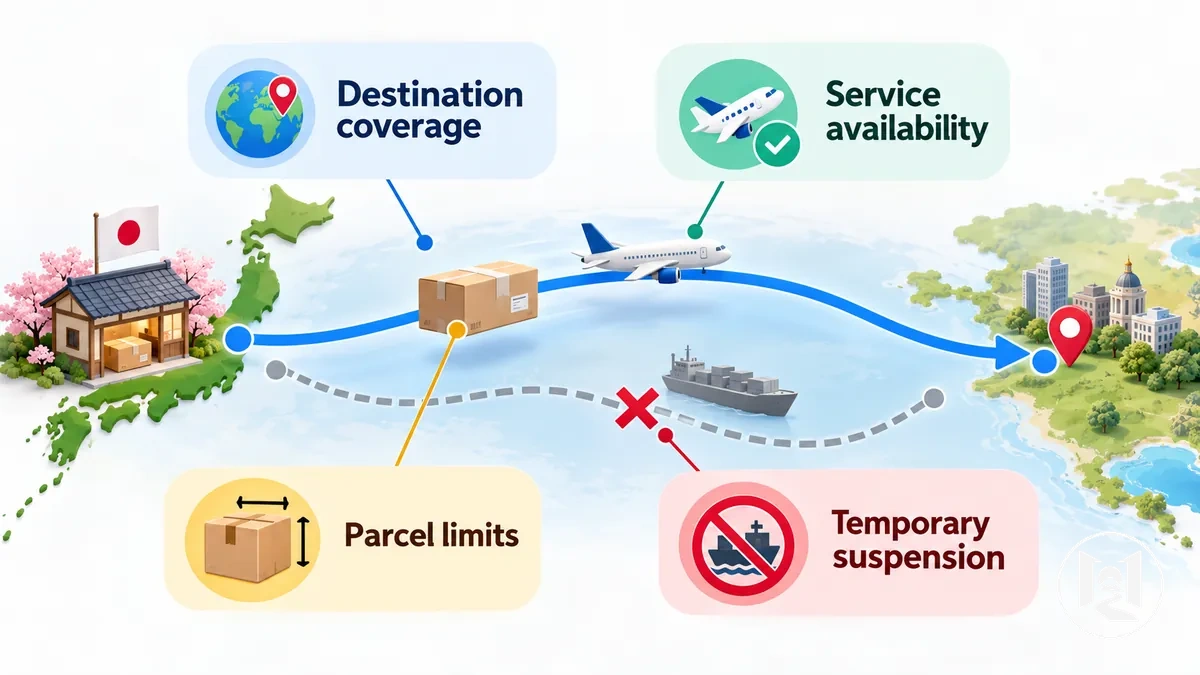
Destination eligibility can change according to country coverage, shipping route availability, parcel limits, and the current status of the relevant carrier service.
These conditions affect whether a usable service exists for the parcel and destination involved.
Destination coverage: If the available international shipping service does not cover the destination country or region, the store cannot use that service to complete direct fulfilment there.
Shipping route and service availability: A destination may be within general country coverage but still lack an available shipping route or eligible carrier service for the order conditions.
Parcel limits: If the parcel exceeds the size, weight, or other limits of the service available to that destination, the order can become ineligible for that shipping option even when the country itself is supported.
Temporary suspension: A carrier or route can become temporarily unavailable, making direct fulfilment unavailable under the current service conditions without establishing a permanent destination restriction.
A temporary suspension should be distinguished from a store policy that excludes a destination or from a longer-term country-coverage limitation.
The visible result may be the same—no usable international shipping service at checkout—but the underlying condition and its duration can differ.
Product-Specific International Shipping Restrictions
A store may accept overseas orders generally while a particular product remains ineligible for international fulfilment because of its classification, destination-specific conditions, carrier rule, or parcel characteristic.
Product eligibility therefore depends on the item, destination, carrier, and shipping service rather than on the store's international-shipping capability alone.
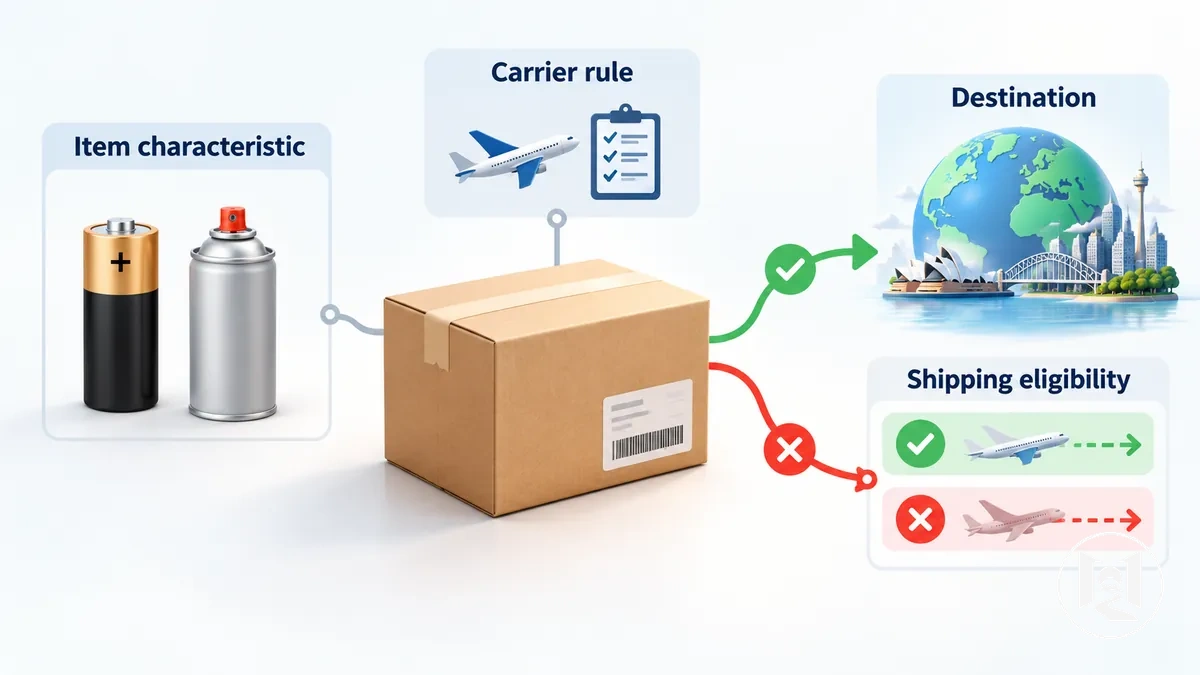
Safety or dangerous-goods classification: A product treated as dangerous goods or subject to a carrier safety rule may require specific transport conditions or may be ineligible for the available international shipping service; batteries and aerosols are representative examples whose treatment can differ by service.
Import or export conditions: A product can become ineligible when an applicable export condition at origin or import condition at the destination does not permit shipment under the selected route or service.
Parcel and service characteristics: A product that is otherwise permitted can still face a shipping restriction when its packed size, weight, or another parcel characteristic falls outside the limits of the service available to the destination.
These mechanisms operate at product level, so one restricted item can be blocked while other products from the same store remain eligible for international fulfilment.
Regulated goods such as batteries, aerosols, or alcohol do not have one universal shipping outcome across all routes; eligibility depends on the product's classification, the destination, the applicable carrier rule, and the selected service conditions.
This distinction keeps an item-specific shipping restriction separate from a store-wide refusal to fulfil overseas orders.
How Direct-Order Restrictions Appear During the Ordering Process
A direct-order restriction can become visible at different ordering stages, and the stage where the signal appears helps narrow the likely restriction class.
A destination unavailable message, a request for domestic details, a product restriction, or an order rejection can each point to a different eligibility condition.
None of these signals by itself establishes a definitive cause, so the useful diagnostic question is what the store was validating when the restriction appeared.
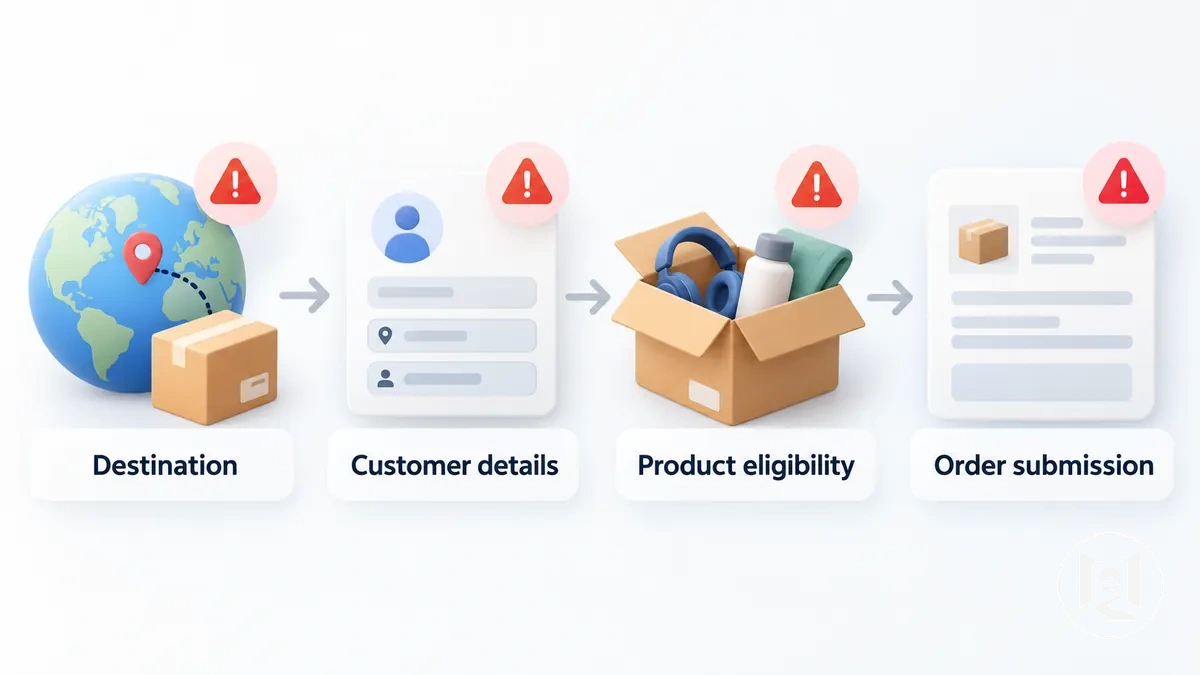
The sequence can begin with destination selection, where country or shipping availability may be tested before customer information is entered.
Customer-detail validation can then expose requirements for a domestic address, telephone number, or other locally expected information.
Product eligibility may be evaluated after the destination or item combination is known, allowing an item-level restriction to appear only for the selected country or shipping service.
A later signal can occur after submission when an order is rejected or cancelled, but that outcome can reflect more than one earlier eligibility condition.
The differentiating criterion is therefore the ordering stage and the specific entity being validated when the signal appears.
Destination unavailable: The signal appears when the selected country or region cannot be chosen or no eligible shipping option is offered. Its interpretation is primarily a destination or service-availability issue; the differentiating criterion is whether the restriction appears before customer or product-specific validation, and the next informational decision is to examine destination coverage and available shipping routes.
Domestic details required: The signal appears when checkout or account registration requires Japanese-format customer details. Its interpretation is a customer-information eligibility condition; the differentiating criterion is whether an address, telephone number, or other required field fails validation, and the next informational decision is to identify which domestic-detail requirement is controlling progression.
Product-country restriction: The signal appears when a particular product becomes unavailable for the selected destination while other items or destinations remain eligible. Its interpretation is a possible product restriction; the differentiating criterion is the item-and-destination combination, and the next informational decision is to examine the product's shipping eligibility under the relevant carrier, service, and destination conditions.
Post-submission rejection: The signal appears after the order has been submitted and is subsequently rejected or cancelled. Its interpretation remains broader because the rejection can reflect store policy, customer-detail validation, destination availability, or product eligibility; the differentiating criterion is whether the store identifies a specific failed condition, and the next informational decision is to use that stated reason to trace the restriction back to the relevant ordering stage.
A checkout-stage signal is therefore an indicator for diagnosis rather than proof of one underlying cause.
Interpreting the signal together with its ordering stage and differentiating criterion narrows the relevant restriction class without treating similar visible failures as interchangeable.
The Overseas Destination Is Unavailable
An unavailable overseas destination means the current order cannot use that country through the store's available direct-delivery configuration.
The signal does not by itself identify whether the restriction comes from a store configuration, a product condition, or the currently available shipping service.
What changes the interpretation
Unavailable across the site: this can point to a store-wide destination restriction or broader delivery configuration.
Unavailable only for one product: item-specific eligibility is more plausible than a general country restriction.
Unavailable only with one route or shipping service: the restriction is more likely service-specific.
Interpret the signal according to where and under which ordering conditions the destination becomes unavailable, rather than treating it as proof of a permanent policy.
A Japanese Address or Domestic Customer Details Are Required
A mandatory Japanese address, domestic telephone format, or other required field can signal that the ordering system is configured around domestic customer details.
For diagnosis, the key distinction is whether the information is structurally mandatory or whether checkout stopped because of a correctable form error or validation problem.
Key distinction
Structural domestic requirement
A Japanese address, domestic telephone format, local-format verification value, or another customer field is compulsory and an overseas value cannot satisfy the accepted state.
Correctable form or validation problem
The field itself is permitted, but the submitted value is missing, malformed, or otherwise fails validation. That failure alone does not establish a categorical overseas-sales restriction.
A single validation failure should therefore be interpreted according to the requirement being enforced and the value state the store accepts, not merely the fact that checkout stopped.
The Product Cannot Be Shipped to the Selected Country
A warning that a product cannot be shipped to the selected country means the current product-destination combination is ineligible for the available direct-shipping route.
It does not by itself show that the entire store lacks international shipping, because eligibility may change with the item, destination, or shipping method.
Which restriction level changes?
Product
The item itself is ineligible under the relevant shipping conditions.
Destination
The item cannot be sent to the selected country under the current rules.
Carrier or service
No suitable route or shipping method is available for that item-destination combination.
Parcel condition
The packed item's size, weight, or another service-relevant characteristic exceeds the applicable limits.
Interpret the warning by checking which variable changes the eligibility result; the message does not by itself establish a broader store-wide restriction.
The Order Is Rejected or Cancelled After Submission
A rejection or cancellation after submission is a diagnostic signal with several possible explanations, not evidence by itself that the store prohibits direct overseas orders.
The useful diagnosis is whether the failure reflects overseas eligibility or a separate transaction-specific condition.
Use the stated reason, not the timing alone
More consistent with overseas eligibility
The message identifies destination support or international fulfilment.
The same shipping or eligibility condition persists for the relevant overseas order context.
The store explicitly identifies the controlling overseas-order condition.
May be a separate checkout failure
Customer verification or address validation fails.
Payment validation rejects the transaction.
Inventory is unavailable.
Shipping feasibility fails because of the destination, product, parcel, or currently available service.
The differentiating evidence is the message or circumstance associated with the rejection or cancellation, not simply the fact that the order failed after submission. An isolated payment, customer-data, inventory, or other transaction-specific failure should be diagnosed separately before it is attributed to overseas-order policy.
How to Distinguish a Direct-Sale Restriction from a Checkout Failure
A direct-sale restriction is a structural limit on overseas eligibility, while a checkout failure is a transaction-specific error or validation problem that may occur even when the order is otherwise eligible.
A persistent restriction that appears under the same policy, destination, item, or customer-detail condition provides stronger diagnostic evidence of a structural limitation.
An isolated checkout failure requires separate diagnosis because the failed transaction alone does not establish an overseas sales restriction.
The distinction becomes clearer when the same criteria are applied to both states.
Compare where the problem appears, whether it is repeated across attempts, whether changing the item or destination changes the result, whether an explicit store policy describes the limitation, and whether domestic customer details are structurally required.
Each signal is evidence to interpret in context rather than a guaranteed diagnosis.
Recurring location of failure: A direct-sale restriction tends to reappear at an eligibility-related point such as destination selection or a mandatory domestic-information requirement, while a checkout failure may occur at a transaction-specific validation step without indicating a broader policy constraint.
Repeatability: A persistent, repeated result under the same overseas-order conditions supports a structural interpretation more strongly than an isolated transaction error that does not recur under equivalent conditions.
Item or destination dependence: If changing the item or destination changes eligibility in a consistent way, the signal can indicate a product- or destination-specific direct-sale restriction. A failure that does not track those eligibility variables is more consistent with a separate checkout issue.
Explicit store policy: An explicit store policy stating that overseas sales, destinations, or particular eligibility conditions are unsupported provides stronger evidence of a direct-sale restriction than a generic checkout error message.
Customer details: If a Japanese address, domestic telephone format, or other domestic customer details are structurally mandatory for progression, that requirement supports a domestic-customer configuration. If valid required data is accepted and the transaction then fails for another validation reason, the failure requires separate interpretation.
Combined diagnostic evidence is more useful than any single signal.
Persistent policy or eligibility constraints that repeat under the relevant overseas-order conditions indicate a direct-sale restriction more strongly, whereas an isolated checkout failure should be treated as transaction-specific until its own cause is established.