
Comparing Direct Shipping, Proxy Buying, and Package Forwarding for Shopping from Japan
For Japanese online shopping from overseas, use direct shipping when you can complete checkout and the store ships the accepted order to your destination. Use package forwarding when you can buy from the store but delivery needs a Japanese address, and use proxy buying when you cannot complete the purchase yourself and an eligible intermediary is permitted to place it. A Japanese address solves a shipping-location problem; it does not by itself solve a purchase-side restriction.
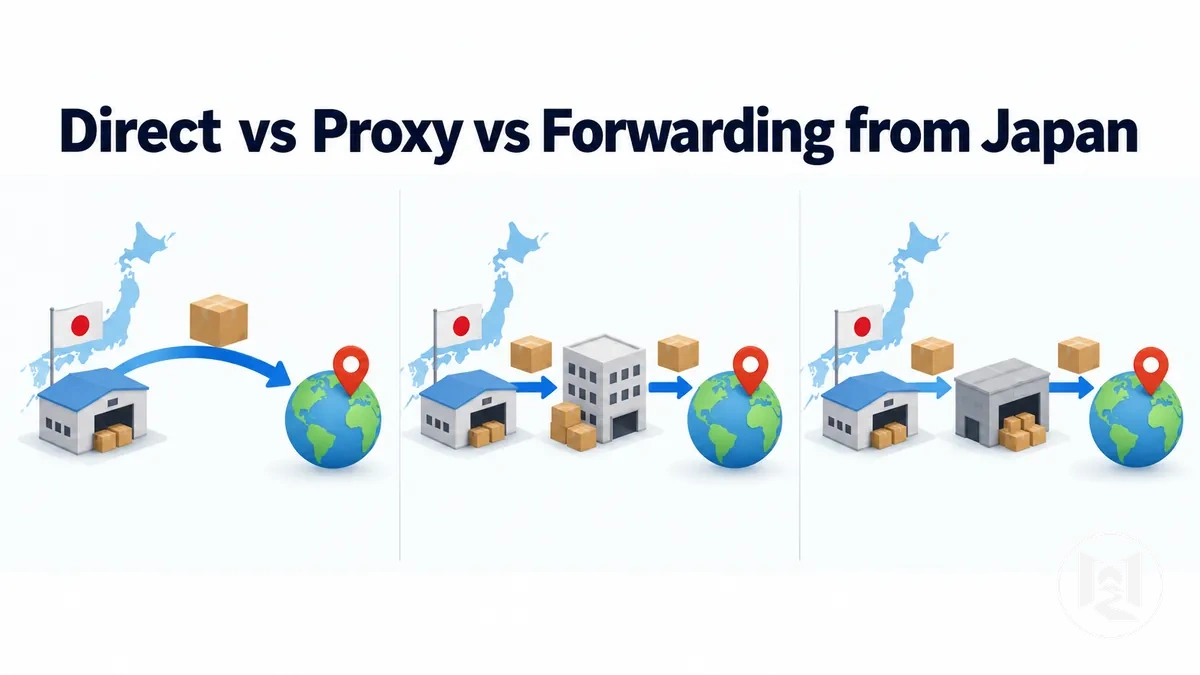
Choose the route by the blocking condition
Start with purchase access before comparing price or convenience. The method changes according to whether the store accepts you as the purchaser and where it can deliver the accepted order.
Direct shipping
- Purchaser
- Shopper
- First delivery
- Overseas destination
- Key condition
- Checkout accepted + overseas shipping supported
Package forwarding
- Purchaser
- Shopper
- First delivery
- Japanese forwarding address
- Key condition
- Checkout works; delivery needs a Japanese address
Proxy buying
- Purchaser
- Intermediary for the shopper
- First delivery
- Proxy receiving point in Japan
- Key condition
- Purchase itself needs an eligible intermediary
This selector identifies the functional route to check. Final availability still depends on the seller, item, payment or account rules, service acceptance, and destination.
After access is established, compare who controls checkout, the parcel route, the applicable fee layers, and who handles problems. Cost, speed, convenience, and responsibility depend on the specific store, service, item, destination, and order, so no method is universally better on every dimension.
Table of Contents
What Each Ordering Method Does
Direct shipping keeps the purchase with the Japanese store, which sells to the shopper and arranges international shipping to the overseas destination when that destination and order are accepted.
Proxy buying delegates the purchase to an intermediary, so the intermediary places the order with the Japanese seller and receives the parcel before onward delivery.
Package forwarding keeps the shopper as the purchaser but adds a Japanese address where a forwarder receives the parcel and reships it overseas.
The functional difference is who buys, where the first delivery goes, and who handles the international leg.
With direct shipping, the Japanese store sells to the shopper and arranges shipment overseas; with proxy buying, the intermediary participates in the purchase before the parcel moves onward; with package forwarding, the shopper completes the purchase and the forwarding service provides the Japanese receiving and reshipment function.
The image shows these purchaser, receiving-point, and onward-shipping roles without implying that every store or service supports every destination or order.
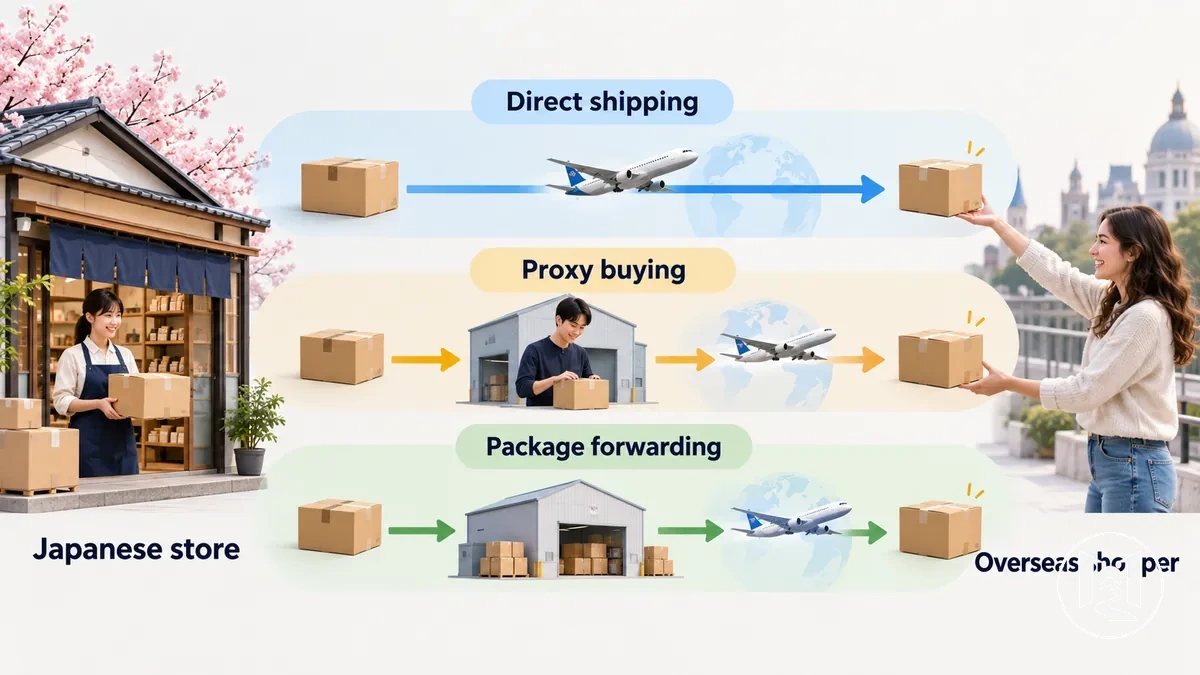
Direct Shipping: The Store Sells and Ships Internationally
Direct shipping means the shopper places the order with the Japanese store, and the store accepts the transaction and arranges shipment to the shopper’s overseas destination.
This relationship applies only when the store supports that destination and accepts the order under its conditions.
The image illustrates the direct store-to-shopper relationship without adding an intermediary to the purchase or delivery path.
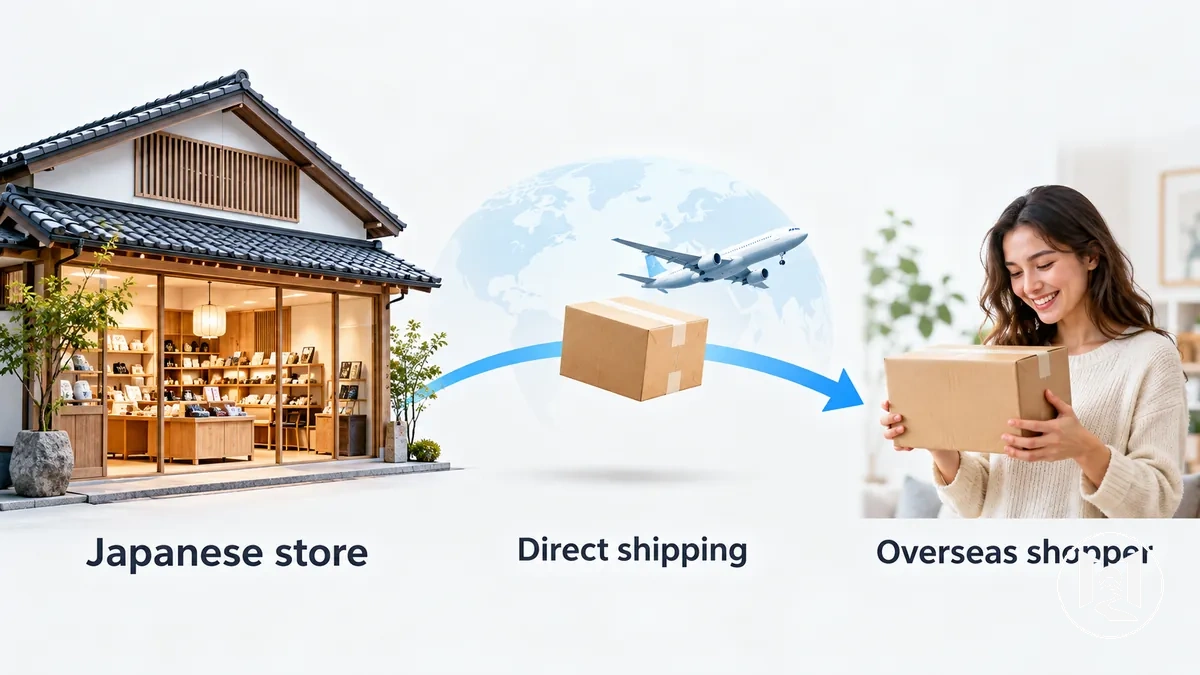
The shipment moves from the Japanese store to the overseas destination without a proxy purchaser or forwarding warehouse being required as part of the method.
Direct shipping therefore keeps both the sale and the international shipment with the store rather than introducing a purchasing or forwarding intermediary.
Proxy Buying: An Intermediary Purchases on Your Behalf
Proxy buying means an intermediary places an order with a Japanese seller on behalf of the shopper.
The intermediary participates in the purchase, receives the item at a Japanese receiving point, and supports onward delivery when the service and seller permit the transaction.
The image illustrates the shopper, intermediary, seller, and receiving-point relationship that distinguishes proxy buying from parcel receipt alone.
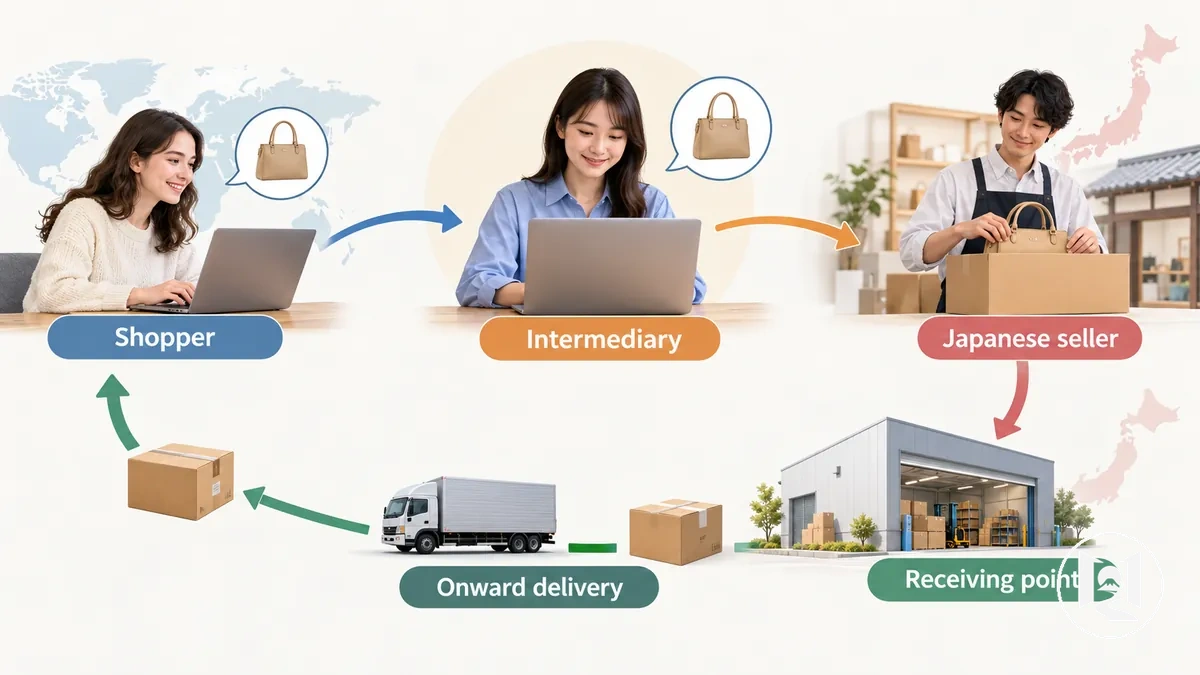
The defining feature of proxy buying is order placement: the intermediary participates in the purchase rather than merely receiving a parcel after the shopper has bought it.
A parcel forwarder, by contrast, can provide a receiving point and reshipment without becoming the purchaser.
Which Japanese sellers, marketplaces, items, or transactions a proxy service can handle depends on the service rules and the seller restrictions that apply to that order.
Proxy buying therefore describes purchasing assistance, not universal access to every Japanese seller.
Package Forwarding: You Buy and a Forwarder Reships the Parcel
Package forwarding means the shopper completes the purchase and sends the order to a Japanese address, where a forwarder receives the parcel and reships it to an overseas destination.
The shopper remains the purchaser; the forwarder provides the receiving and reshipment role rather than placing the order.
The image shows this delivery path and the separation between purchasing and forwarding roles.
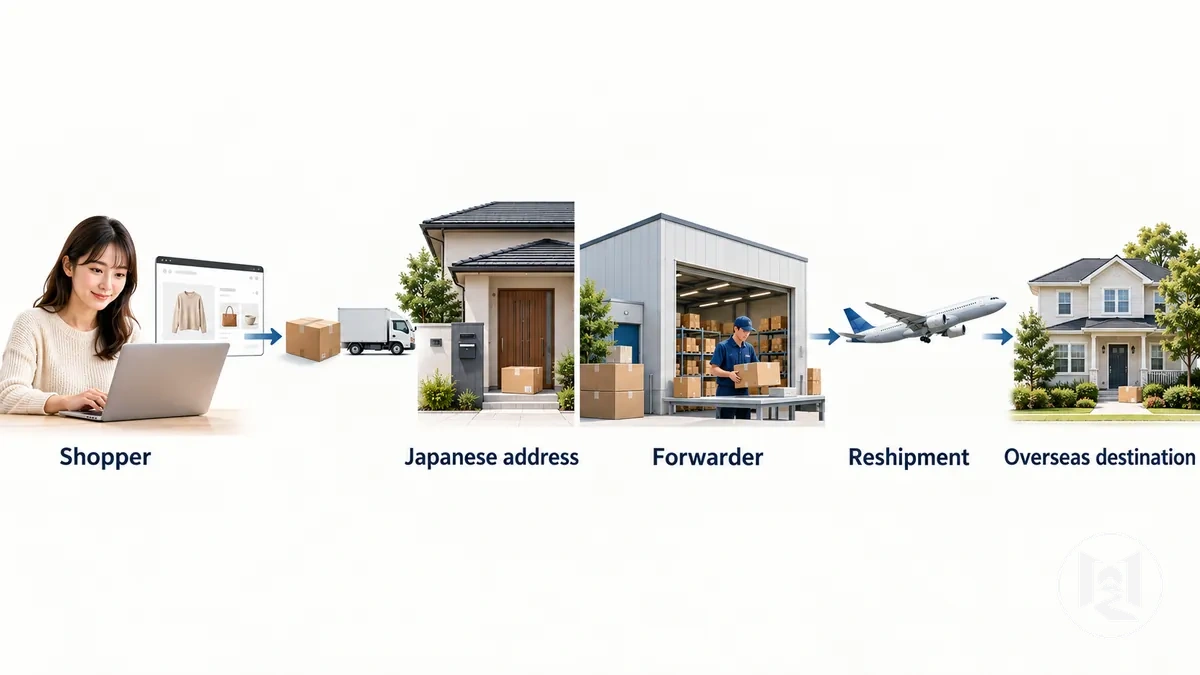
The routing is shopper places the order → Japanese address receives the parcel → forwarder handles onward shipment → overseas destination.
Domestic delivery brings the parcel to the Japanese receiving point, after which the forwarder handles reshipment when the parcel, service, and destination are accepted.
A Japanese address can satisfy a shipping-location requirement, but payment restrictions, account requirements, identity checks, seller rules, or other checkout conditions may still prevent the purchase.
Package forwarding therefore changes the delivery path without necessarily changing purchase-side eligibility.
How the Methods Differ in Access, Control, Shipping, Cost, and Responsibility
Direct shipping, proxy buying, and package forwarding differ across five decision dimensions: store access, checkout control, shipping path, fee layers, and responsibility.
These criteria matter because each method changes who can complete the purchase, who controls order placement, how the parcel moves, which cost layers can apply, and who handles particular parts of the transaction or delivery.
The practical implication of each dimension depends on the Japanese store, service terms, destination, item, and order.
No single criterion determines a universal outcome across all purchases.
For each method, the comparison follows the same pattern: identify the relevant condition or attribute, then assess its practical implication for the shopper.
The same five dimensions apply to direct shipping, proxy buying, and package forwarding, providing a consistent basis for comparison.
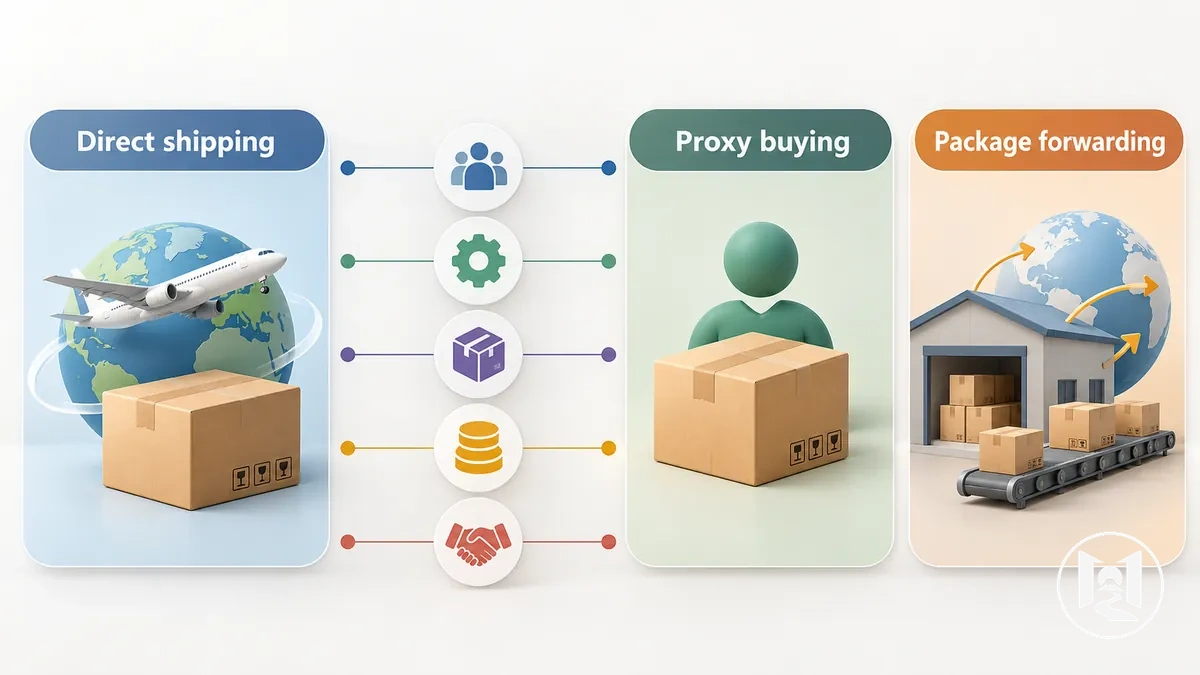 An intermediary can change several dimensions at once, including the shipping path, fee layers, and responsibility.
Those changes do not by themselves mean a method is cheaper, faster, or easier to resolve when a problem occurs.
- Store access: Checkout acceptance, destination support, Japanese address requirements, and other seller conditions affect whether a method is feasible for a particular order.
- Checkout control: Who places the order and communicates with the seller changes purchaser control and where order-related responsibility sits.
- Shipping path: A domestic leg, intermediary, receiving point, or separate international leg changes how the parcel moves before reaching the overseas destination.
- Fee layers: The cost structure can include different combinations of domestic shipping, service fees, and international shipping depending on the method and order conditions.
- Responsibility: The seller, intermediary, forwarder, carrier, or shopper may handle different parts of the transaction and delivery, affecting who must address an issue at a particular stage.
Store Access and Checkout Requirements
Store access and checkout conditions determine whether direct shipping, package forwarding, or proxy buying can be considered before cost or convenience matters.
The main checks are international shipping availability, destination address support, payment acceptance, account requirements, and whether a Japanese purchaser is required.
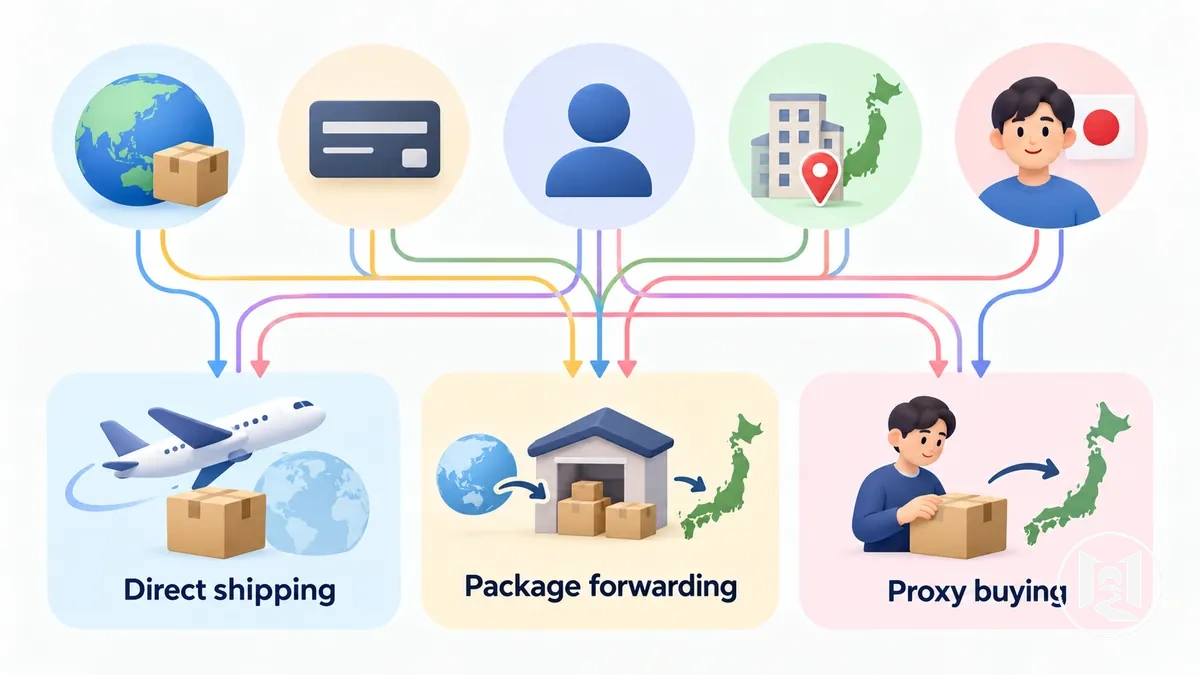
These conditions separate purchase access from shipping access because a shopper may be able to complete checkout even when the store does not support delivery to the overseas destination.
A Japanese address is a delivery requirement, while an eligible purchaser or account is a purchase-side requirement.
If a store accepts the shopper's checkout, payment, and account but ships only within Japan, package forwarding may address the shipping-location condition by providing a Japanese receiving address.
If the shopper cannot complete the purchase because of purchaser, payment, account, or seller restrictions, a forwarding address alone does not change that restriction, while proxy buying may be relevant when the intermediary and seller permit the transaction.
Direct shipping remains conditional on both purchase acceptance and overseas destination support, so the applicable method depends on the specific store, marketplace, payment method, destination, and service conditions.
- Overseas destination supported: If the store supports the shopper's destination address and accepts international shipping for the order, direct shipping may be available; if delivery is limited to Japan, a method using a Japanese address may need to be considered.
- Checkout and payment accepted: Payment acceptance and order acceptance determine whether the shopper can complete the purchase personally; if checkout prevents the shopper from purchasing, package forwarding alone does not address that purchase-side restriction.
- Account usable: An account requirement can affect whether the shopper is eligible to place the order, so the relevant method depends on whether the shopper, an intermediary, or another permitted purchaser can satisfy the store's account conditions.
- Japanese address required: When checkout is accepted but the store requires domestic delivery to a Japanese address, package forwarding may address the shipping-location condition without changing who purchases the item.
- Japanese purchaser required: When the restriction concerns who may make the purchase rather than where the parcel is delivered, proxy buying may be relevant if the proxy service and Japanese seller permit that transaction; a Japanese address by itself does not satisfy a purchaser requirement.
Who Places the Order and Controls Checkout
Direct shipping and package forwarding keep order placement with the shopper, while proxy buying delegates order placement to an intermediary.
In the shopper-placed models, the shopper enters checkout information and retains purchase control over the merchant transaction; in proxy buying, the intermediary handles checkout based on the shopper's purchase instructions.
This comparison concerns transaction control and seller communication, while parcel handling is a separate responsibility.
| Method | Order placement | Checkout control | Seller communication |
|---|---|---|---|
| Direct shipping | Shopper places the order | Shopper enters and submits checkout information | Shopper communicates with the seller, subject to merchant policy |
| Proxy buying | Intermediary places the order for the shopper | Intermediary handles merchant-side checkout using the shopper's purchase instructions | Seller communication generally passes through the intermediary, subject to service terms and merchant policy |
| Package forwarding | Shopper places the order | Shopper enters and submits checkout information | Shopper communicates with the seller; the forwarder handles parcel handling rather than merchant-side checkout |
Order changes and seller communication depend on the merchant policy that governs the transaction and, for proxy buying, the intermediary's service terms.
Shopper-placed ordering does not guarantee that an order can be changed after checkout because the seller may restrict modifications or communication channels.
In proxy buying, purchase-side responsibility is mediated through the intermediary because it places the order, while direct shipping and package forwarding keep the shopper as the order placer.
Purchase control therefore remains distinct from parcel handling, which can be performed by a forwarder or carrier without transferring control of checkout.
Shipping Path and Package Handling
The shipping path differs by whether the parcel moves directly from the Japanese seller to the overseas destination or first passes through a Japanese receiving point: direct shipping uses the direct store-to-destination route, while proxy buying and package forwarding add a domestic leg and intermediary handoff in Japan.
The three simplified routes below map the origin, any intermediate receiving point, and the overseas destination; actual carrier routing can vary.
Direct shipping
Store overseas destination
Proxy buying
Seller proxy receiving point overseas destination
Package forwarding
Seller forwarding address overseas destination
An additional intermediary handoff may affect timing because the parcel is received and then reshipped, but it does not make a delay inevitable.
Tracking continuity may also change between the domestic leg and onward shipment depending on the carriers and service arrangements involved.
Responsibility boundaries can shift at the receiving point because the seller, intermediary or forwarder, and carrier handle the parcel at different stages.
These implications concern the physical route and package handling rather than consolidation, customs procedures, or carrier-specific performance.
Fee Layers and Shipping Cost Structure
Total order cost differs because direct shipping, proxy buying, and package forwarding can combine different fee layers rather than following one universal cost pattern.
The table compares these cost components rather than current prices, because applicability and amount depend on the store, intermediary or forwarder, shipment, and order conditions.
| Method | Item price | Domestic shipping | Service or handling fees | International shipping | Other order-dependent charges |
|---|---|---|---|---|---|
| Direct shipping | Store item price forms the purchase base | May be absent as a separate fee layer when the store ships directly overseas; store-specific charges can still apply | Not inherent to the method; store-specific service or handling charges may still apply | Can apply when the store arranges delivery to the overseas destination | Can apply when the store or order conditions introduce an additional charge |
| Proxy buying | Japanese seller's item price forms the purchase base | Can apply when the seller sends the parcel to the proxy receiving point in Japan | A service fee or handling fee may apply according to the intermediary's terms and the order | Can apply when the intermediary sends the parcel from Japan to the overseas destination | Can apply when the service or order requires an additional charge |
| Package forwarding | Japanese seller's item price forms the purchase base | Can apply for the domestic leg from the seller to the forwarding address | A forwarding service fee or handling fee may apply according to the forwarder's terms and parcel handling | Can apply when the forwarder reships the parcel to the overseas destination | Can apply when the forwarding service or order conditions introduce an additional charge |
Each applicable fee layer contributes to total order cost, but the combination differs by method and transaction.
Proxy buying may add domestic shipping to a receiving point plus a service fee or handling fee before international shipping, while package forwarding may add a domestic leg and forwarding-related charges before reshipment.
Direct shipping can place international shipping within the store transaction without those intermediary-specific fee layers, although store-specific charges may still apply.
For example, an order with a lower item price can produce a higher total order cost when domestic shipping, a service or handling fee, and international shipping are added, while another order with a higher item price may involve fewer additional fee layers.
Comparing the full cost structure therefore requires checking which charges actually apply to the specific order rather than judging the methods from item price alone.
Responsibility for Delivery Problems, Returns, and Refunds
Responsibility depends first on the failure point: purchase-side responsibility concerns the merchant transaction, while shipping-side responsibility concerns parcel handling and delivery.
The table maps each issue stage to the shopper, Japanese seller, intermediary, forwarder, or carrier that may need to initiate a claim, return, refund request, or other resolution, subject to the applicable policies and terms.
| Failure point | Responsibility type | Likely contact or initiator | Qualification |
|---|---|---|---|
| Seller-side order error before intermediary or forwarder receipt | Purchase-side responsibility | Shopper or intermediary contacts the Japanese seller, depending on who placed the order | Return or refund options depend on merchant policy, item condition, and transaction terms |
| Problem identified at an intermediary or forwarding receiving point | Shipping-side responsibility at the receiving stage | Intermediary or forwarder may document the issue and initiate the appropriate contact or claim | Available action depends on service terms, evidence of condition, and where the problem is determined to have occurred |
| Damage or loss during onward or international shipment | Shipping-side responsibility | Intermediary, forwarder, shopper, or carrier may need to initiate the claim according to the shipping arrangement | Carrier rules, service terms, destination, and any applicable coverage determine the available process and outcome |
| Return requested after overseas delivery | Purchase-side and shipping-side responsibilities may overlap | Shopper may need to coordinate with the seller and, where applicable, the intermediary or forwarder | Return and refund eligibility depends on merchant policy, service terms, item condition, and return-shipping requirements |
For direct shipping, the shopper generally retains the merchant relationship with the Japanese seller, while the carrier handles the shipping stage.
With proxy buying, the intermediary controls the merchant-side transaction and may therefore need to communicate with the seller, whereas package forwarding leaves the purchase relationship with the shopper and gives the forwarder responsibility for the parcel stages it handles.
A claim, return, or refund outcome typically depends on the merchant policy, service terms, carrier rules, destination, item condition, and failure point rather than on the ordering method alone.
For example, if the Japanese seller sends the wrong item and the problem exists before an intermediary receives the parcel, resolution is primarily a purchase-side issue involving the seller and the party that placed the order.
If the parcel is received correctly and is damaged during a later forwarding stage, the likely resolution contact may shift toward the forwarder or carrier because the failure point is within shipping-side responsibility.
When Each Method Fits the Shopping Situation
Method fit depends first on the access constraint: whether the shopper can complete the purchase directly, whether the only missing requirement is a Japanese address, or whether the purchase itself requires a purchasing intermediary.
Direct shipping is relevant when store acceptance and destination support allow the shopper to buy and use overseas shipping.
Package forwarding is relevant when the shopper can complete checkout and payment acceptance requirements but the seller requires delivery to a Japanese address.
Proxy buying is relevant when a purchase restriction prevents the shopper from completing the transaction and an intermediary is permitted to place the order.
Actual suitability remains conditional on the specific seller rule, payment acceptance, account conditions, service coverage, item restrictions, and destination support that apply to the order.
A method that fits the basic access condition may still be unavailable if the seller, service, destination, or item falls outside those conditions.
The three branches below therefore identify the access constraint that changes method fit rather than providing a universal recommendation.
- Store accepts the shopper and ships overseas: Direct shipping fits when the store accepts the purchase and supports overseas shipping to the required destination, subject to its payment, account, item, and seller conditions.
- Shopper can buy but needs a Japanese address: Package forwarding fits when purchase access is available to the shopper but the delivery condition requires a Japanese address, provided the seller and forwarding service accept the order and item.
- Shopper cannot complete the purchase and needs an intermediary: Proxy buying fits when a purchasing intermediary is required to place the order, provided the seller rule and proxy service permit that transaction for the item and destination.
Direct Shipping When the Store Accepts Your Order and Ships Overseas
Keeping the merchant relationship direct also means there are fewer planned intermediary handoffs between the store and the shopper, although this does not by itself establish lower cost, faster delivery, or greater flexibility.
For example, a store may accept the shopper's payment and checkout but offer delivery only within Japan; in that case, direct shipping does not fit because overseas destination support is missing.
Actual availability remains subject to the store's order, item, and destination conditions.
Proxy Buying When the Store or Marketplace Will Not Accept Your Overseas Purchase
Proxy buying fits when a purchase barrier prevents the shopper from completing the order directly and an intermediary can place the purchase under the seller's rules and the service's rules.
The relevant barrier may involve local-only checkout, a payment constraint, an account requirement, a seller restriction, or marketplace conditions that require an eligible Japanese purchaser.
Availability remains conditional on whether the intermediary is permitted to handle that seller, item, marketplace, and transaction.
A purchase-side restriction is different from a shipping-only limitation because providing a Japanese delivery address does not change who can complete checkout or satisfy the seller's purchasing conditions.
For example, a shopper may be able to view an item and provide a Japanese address but still be unable to place the order because checkout requires an eligible local account or purchaser.
In that situation, forwarding alone does not resolve the purchase barrier; proxy buying changes the transaction by having an eligible intermediary place the purchase when the seller and service rules allow it.
- Local-only checkout: If checkout cannot be completed by the overseas shopper, a Japanese address alone may be insufficient; an intermediary may be relevant when it is eligible to place the order.
- Payment or account barrier: A payment constraint or account requirement can prevent direct order placement even when delivery within Japan is possible; proxy buying may fit when the intermediary can satisfy the permitted purchase conditions.
- Seller or marketplace restriction: A seller restriction or marketplace rule may limit who can purchase, so proxy buying is relevant only when the transaction is accepted under both seller and service rules.
- Intermediary eligibility: The intermediary must be permitted to purchase the particular item and order; proxy buying does not make a prohibited or unsupported transaction permissible.
Package Forwarding When You Can Buy but the Store Ships Only Within Japan
Package forwarding fits when the shopper can complete checkout successfully but the store requires domestic delivery to a Japanese address or does not provide the needed overseas shipping route.
In that situation, the Japanese address solves the delivery-location constraint, while onward shipping depends on the forwarder accepting the parcel and supporting the overseas destination.
The shopper must first be able to complete the purchase under the store's payment, account, and seller rules.
Domestic delivery must then be permitted to the Japanese receiving address, the forwarder must accept the parcel or item, and onward shipping to the overseas destination must be available.
If a purchase restriction prevents checkout itself, package forwarding alone does not resolve that purchase-side barrier.
- Purchase succeeds: The shopper can complete checkout under the store's purchase conditions.
- Domestic Japanese delivery is allowed: The store can send the order to the Japanese address used as the receiving point.
- Forwarder accepts the parcel: Forwarder acceptance depends on the parcel, item, and service conditions that apply.
- Onward shipping is available: The forwarder can reship the accepted parcel to the required overseas destination under its applicable destination and shipping conditions.