
Troubleshooting Tracking and Delivery Problems for Orders from Japan
Start with the last confirmed physical scan, identify the shipment stage and responsible carrier, then compare the event that should logically come next. A tracking gap alone does not prove that a parcel from Japan is lost; stronger reasons to act include an explicit exception or request, a route contradiction, unresolved delivery evidence, or a carrier investigation that cannot locate the shipment.
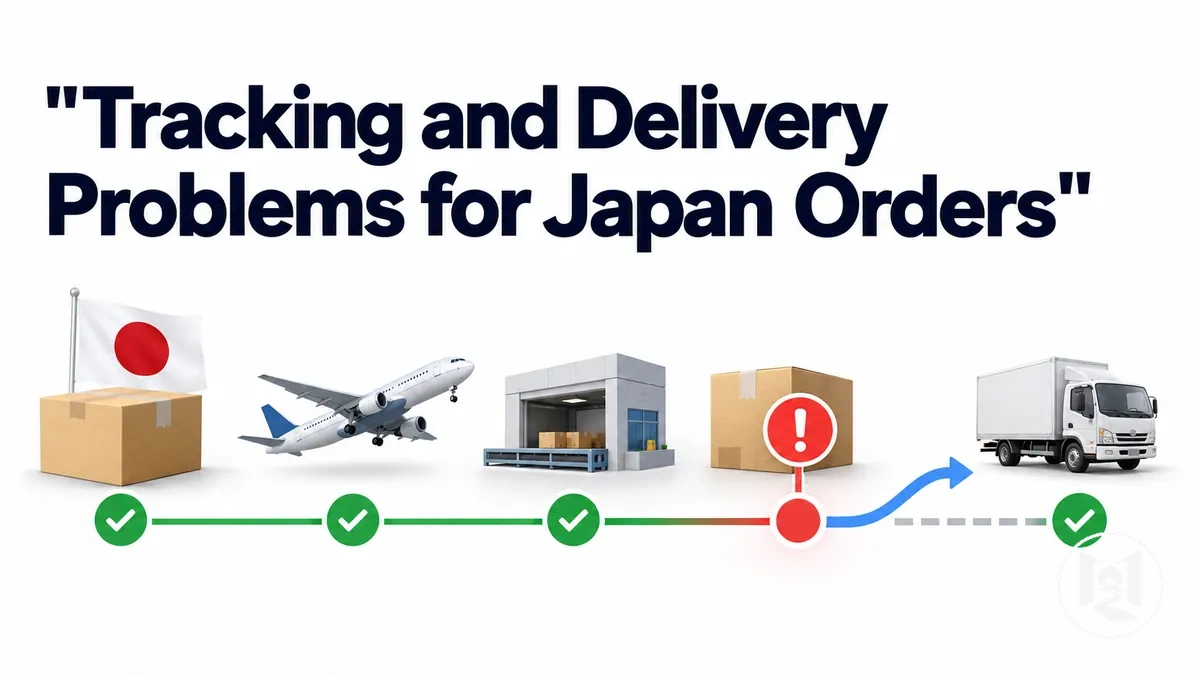
Diagnose the problem from the last confirmed event
Use the tracking record as a sequence of evidence. The useful question is not simply “How long has nothing changed?” but what was last confirmed, what should happen next, and which carrier should record it.
- Confirm the evidence. Separate a physical scan or carrier acceptance from label creation or electronic pre-advice, and note the exact status, timestamp and location.
- Locate the shipment stage. Classify the last confirmed event as origin/export, international transit or handoff, customs/import processing, destination processing, or end-stage delivery.
- Identify the expected next event. Look for the next logical acceptance, transit, release, processing, delivery-attempt or completion event in the carrier that should record it.
- Choose the next action from verified signals. Continue checking the relevant official record when the sequence is still plausible; follow an explicit exception or request, verify a route anomaly, or escalate an unresolved break through the carrier or seller that can act on it.
- Origin or export
- Look for physical acceptance, export completion or the next outbound event. Electronic shipment data alone does not confirm movement.
- International transit or handoff
- Compare origin and destination carrier records. A temporary visibility gap can occur before the receiving carrier records acceptance.
- Customs or destination processing
- Distinguish routine processing from an explicit request, hold, exception or release; the recorded condition determines whether action is needed.
- Attempted, held or delivered
- Verify the carrier’s next instruction, collection location, recipient details and available proof of delivery rather than treating all end-stage labels as equivalent.
Decision boundary: “no new scan” means the visible tracking record has not changed; it does not establish that physical movement stopped. Potential loss requires stronger supporting evidence than a missed estimated delivery date or silence alone.
The sections below apply this sequence to tracking gaps, handoffs, customs processing, possible loss and end-stage delivery problems.
Table of Contents
How to Interpret Tracking Statuses and Update Gaps for Orders from Japan
A tracking status for an order from Japan should be interpreted according to the shipment stage and carrier context, not from the status label alone.
The same absence of a new scan can have different implications before export, during international transit, at a carrier handoff, or after destination processing.

A tracking status becomes more useful when it is read with the latest scan and the expected next event.
An origin-processing or export event usually points toward outbound movement. An international-transit event makes arrival, inward processing, or destination-carrier acceptance the logical next stage, while a destination-processing event makes local movement or delivery the next stage.
Around a carrier handoff, the expected next event may appear in the destination carrier's system rather than as another update in the origin record.
Exact status wording and scan sequences can differ by carrier.
An update gap is not the same as a confirmed physical delay.
A parcel can move between scan points or wait for tracking data to be recorded or synchronised, so the absence of a new tracking event establishes only that the visible record has not changed.
The gap warrants closer checking when the expected next event does not appear and the carrier instead records an exception, retention state, delivery issue, or another event requiring action.
The relevant check therefore depends on the shipment stage and the event expected to follow it.
Broad status families such as origin processing, export, international transit, handoff, customs, destination processing, retention, and final delivery describe different operational stages, but carriers may use different wording for comparable events.
The table organises each stage by its typical meaning, expected next event, and the specific check that helps interpret an update gap without treating the label as a universal diagnosis.
| Tracking stage | Typical meaning | Expected next event | What to check |
|---|---|---|---|
| Origin processing | The parcel has entered or is being processed within the origin carrier's network. | Export sorting, outward processing, or dispatch. | Confirm the latest acceptance or processing scan and whether an export event follows. |
| Export | The parcel is being prepared for departure from Japan or has been recorded as dispatched from the origin network. | International transit or an arrival event in the destination network. | Check whether the latest scan records export preparation or actual dispatch. |
| International transit | The parcel is between the origin and destination networks or awaiting the next recorded event. | Arrival, inward processing, or destination-carrier acceptance. | Check the last confirmed scan and whether the next stage should involve a carrier handoff or destination arrival. |
| Handoff | Responsibility or tracking visibility is shifting between the origin carrier and a destination carrier. | An acceptance or processing event in the destination network. | Check whether a destination-carrier acceptance event has appeared even if the origin record has not changed. |
| Customs | The international shipment is in import processing rather than ordinary transport movement. | Release from customs or transfer into destination processing. | Check whether the tracking status shows routine processing, a release event, or an explicit request or hold requiring action. |
| Destination processing | The parcel has entered the local delivery network and is being sorted or routed toward delivery. | Local transport, delivery-office processing, or an out-for-delivery event. | Check the latest destination scan and the next local delivery event expected from that stage. |
| Retention | The parcel is being held at a facility or collection point rather than continuing automatically toward delivery. | Collection, redelivery, release, or another carrier instruction. | Check whether the carrier provides a collection, contact, or redelivery requirement. |
| Final delivery | The carrier records the shipment as having reached the delivery-completion stage. | Delivery confirmation rather than another transport scan. | Check the recorded delivery event and any available completion details before interpreting the final delivery state. |
Tracking Has Not Updated After Dispatch
A parcel can continue moving after dispatch even when no new tracking update appears. The absence of a new scan may reflect export processing, movement between scan points, delayed data synchronisation, or transfer toward another carrier rather than confirmed lack of physical movement.
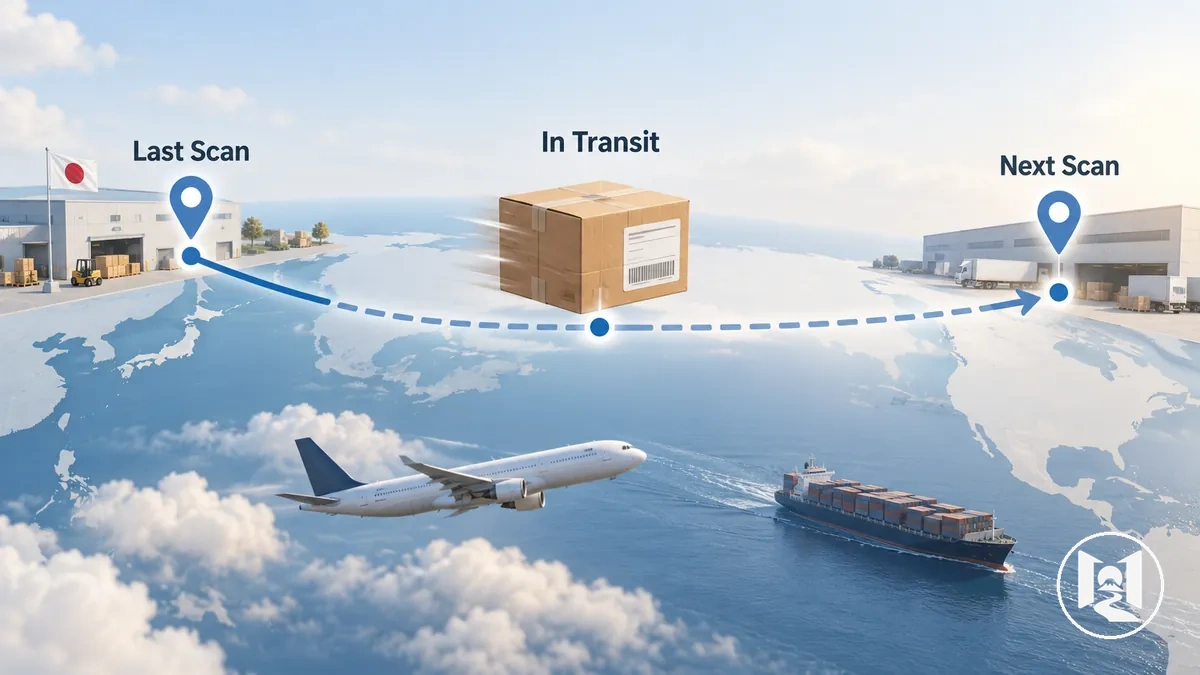
Elapsed time should be judged against that shipment stage and service context. A shipment from Japan can retain the same export or transit status while moving toward the next facility, then receive several events when the next carrier or processing point records it.
Tracking Stops During an International Carrier Handoff
An international carrier handoff can create a temporary tracking-visibility gap when an origin carrier transfers a parcel toward a destination carrier that records events in a separate system. Different identifiers, scan schedules or event labels can make one official record update later than the other while the handoff continues.
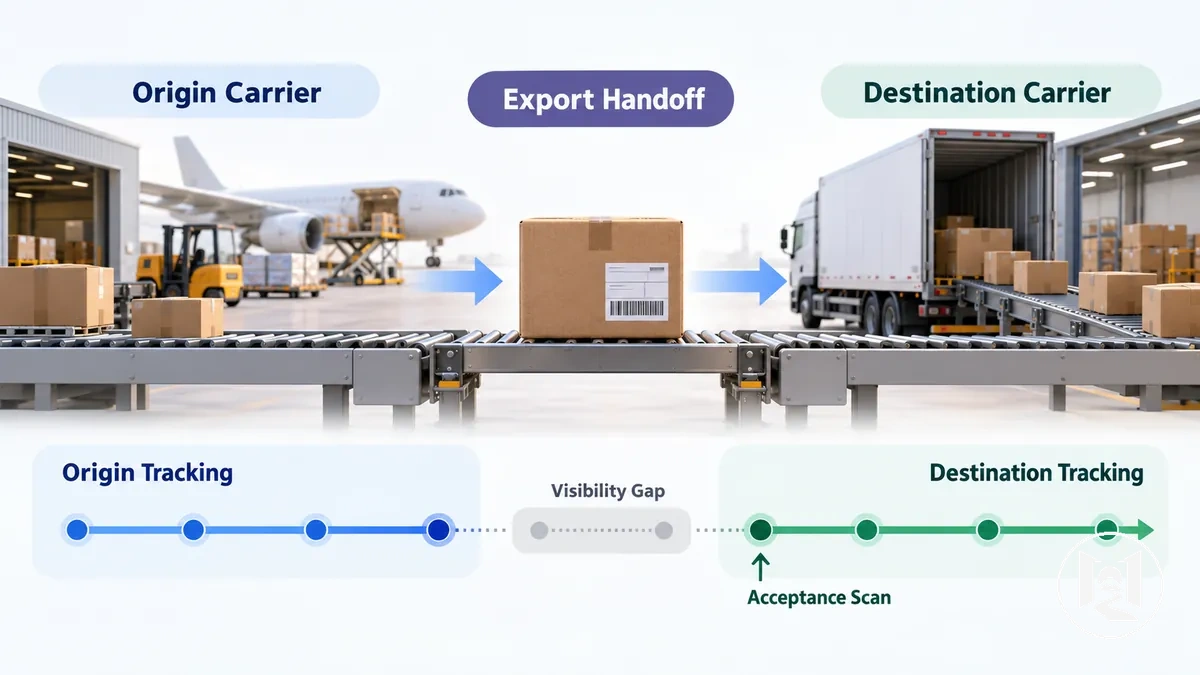
Origin carrier record
May end with the last outbound, export or transfer-related event before the receiving network records the parcel.
Destination carrier record
May remain empty or unrecognised until its first acceptance or processing event is created, including when a local identifier is used.
Diagnostic implication: one system can appear inactive before the other begins to update. The useful next signal is destination-carrier acceptance or processing; a gap at the transfer boundary does not by itself establish loss or handoff failure.
For example, export completion can remain the newest event in the origin record while the destination carrier is still awaiting its first acceptance scan. Compare both official records before deciding that the parcel has stopped progressing.
Tracking Shows Customs or Import Processing
A customs processing or import processing tracking status usually indicates that the parcel is at a border-processing stage; by itself, it does not establish loss or another adverse shipment outcome.
The key distinction is whether the tracking status shows routine processing or an explicit request, exception, or release event that changes what the recipient should do next.
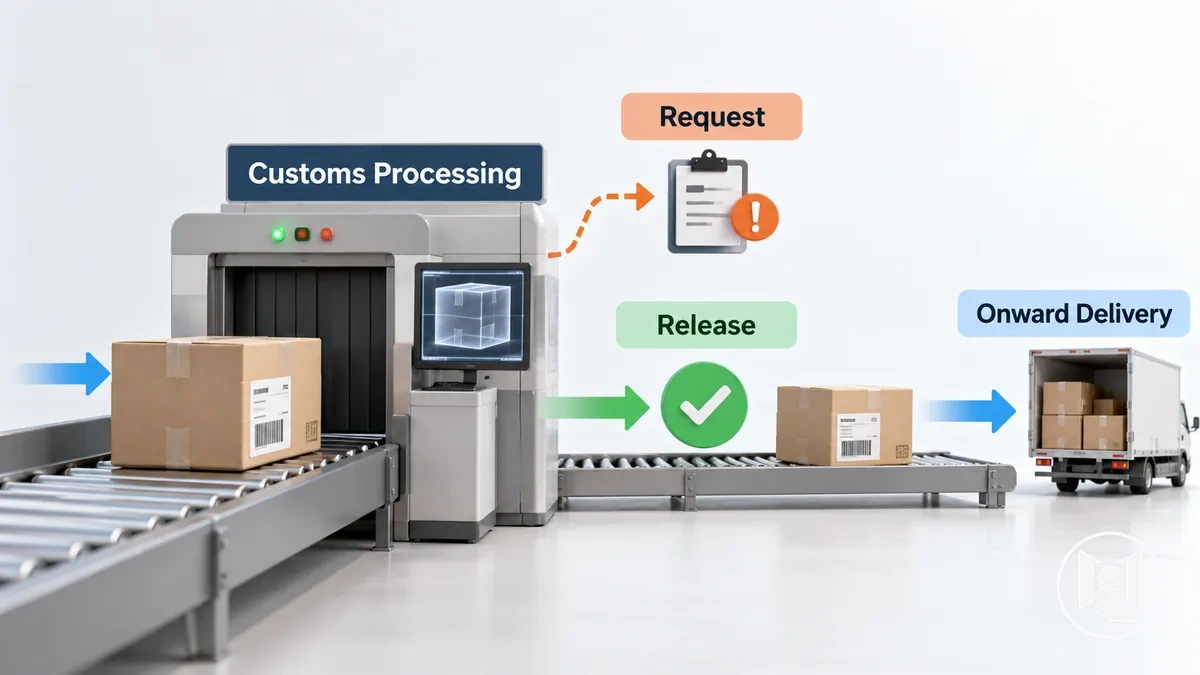
The next action should follow the specific signal recorded during import processing rather than an assumed clearance time.
These cues separate a status that may simply require waiting for the next event from one that may require documentation, payment, or contact:
- Routine processing: a customs or inspection status with no explicit request indicates that border processing is still being recorded and does not by itself identify an actionable problem.
- Documentation request: a status or official notice asking for documentation or additional information indicates that the requested material should be provided through the relevant carrier or authority channel.
- Payment request: an explicit payment request indicates that action may be required before the shipment proceeds, according to the instructions in the relevant carrier or official record.
- Release: a release or equivalent event indicates that the customs stage has ended for tracking purposes and the next expected event is onward processing or movement toward delivery.
If the tracking wording is ambiguous, verify the exact status in the relevant carrier or official record before treating it as an inspection, payment requirement, release, or other exception.
Detailed customs obligations, tariff calculations, and import rules fall outside this tracking-status diagnosis.
Retention and Final Delivery Statuses
An end-stage tracking status should be interpreted from the carrier's exact event meaning and delivery context. A retention or held-for-collection status means the parcel remains in a local holding state, while a final delivery status records completion in the carrier system without necessarily establishing who personally received it.
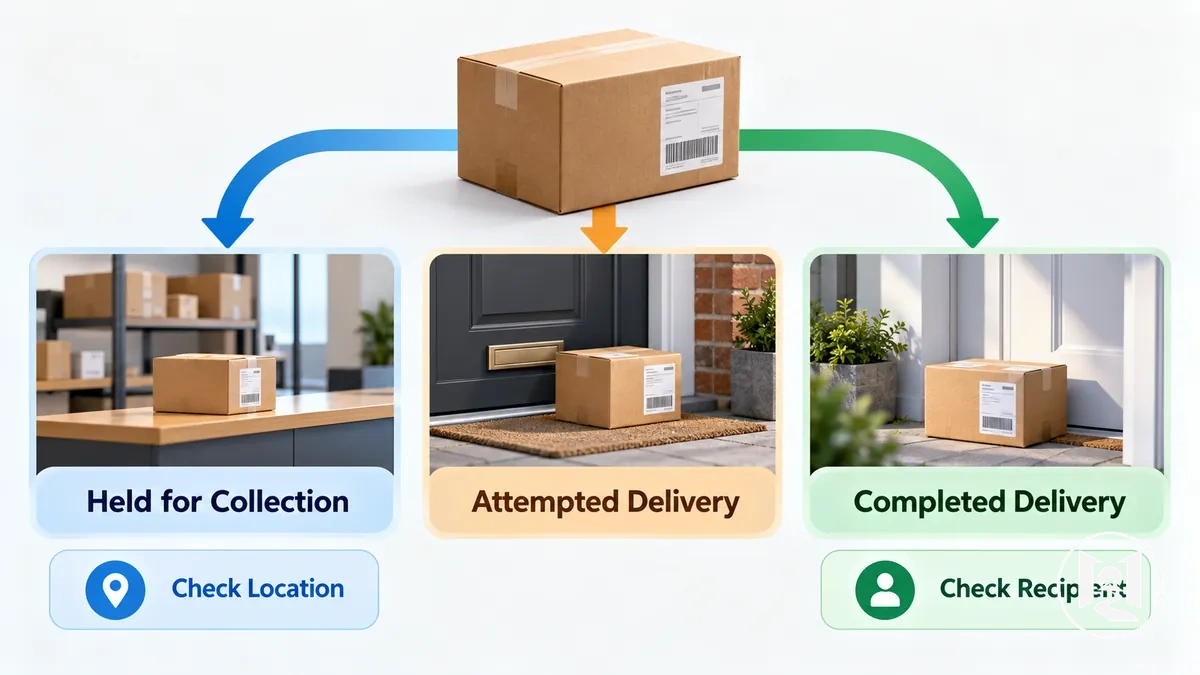
A parcel held for collection therefore requires confirmation of where it is being retained and what is needed to collect it, whereas a completed-delivery event requires verification of the recorded delivery location or recipient details.
Why International Orders from Japan Become Delayed or Appear Stuck
An international order from Japan can appear delayed for more than one reason: tracking visibility may lag behind the parcel, or the shipment may actually be waiting in processing, transit, a carrier handoff, customs, or the destination network.
The same symptom, such as no new tracking update, therefore does not establish a single cause.
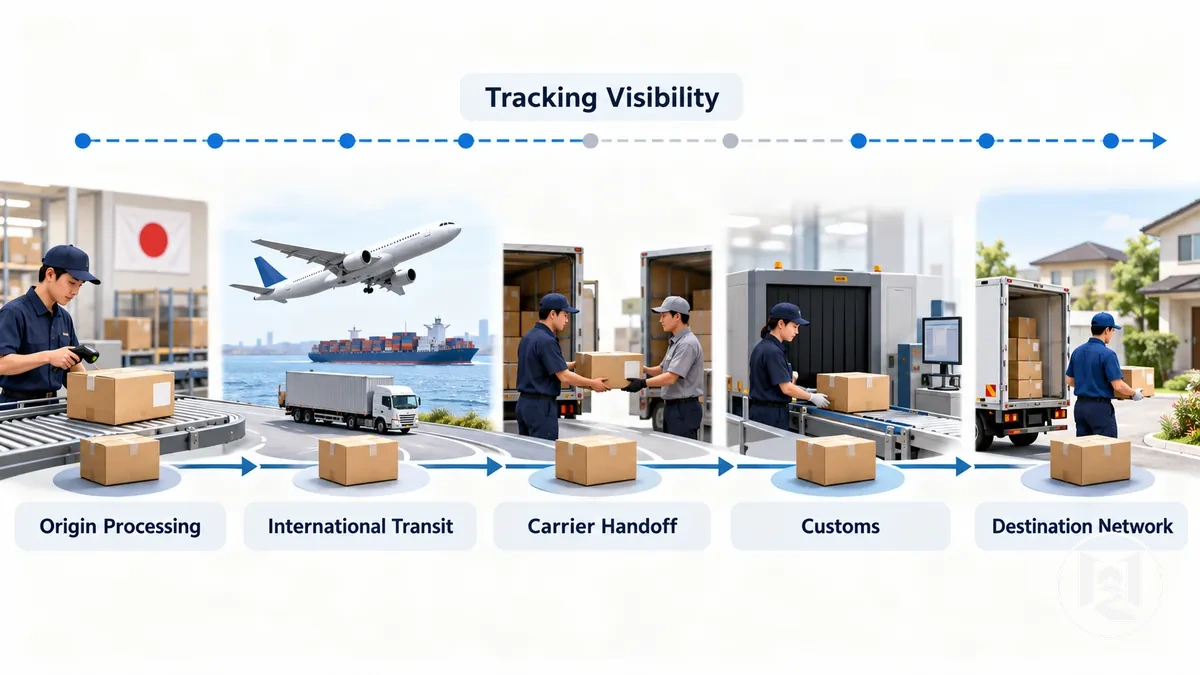
The most useful way to interpret a delay is to match the shipment stage with a plausible mechanism and the observable signal in the tracking record.
These groups separate tracking-data latency from physical transport or processing delays as the parcel progresses from Japan toward its destination:
- Tracking visibility: scan delay or data synchronisation can create the appearance of a delay even when movement continues. A tracking record with no new event but no explicit exception indicates limited visibility rather than proof that the parcel has stopped.
- Origin processing: a parcel may remain in acceptance, sorting, or export processing before an outbound event is recorded. Repeated origin-stage events or the absence of export completion may indicate that the shipment has not yet progressed to international transit.
- International transit and routing: transport capacity, routing changes, or movement between facilities can contribute to slower progress between origin and destination scans. A longer interval between transit events may therefore reflect a physical transport constraint rather than a tracking-system problem.
- Carrier handoff: transfer between an origin carrier and a destination carrier can create a temporary visibility gap while the next network records acceptance. An origin record that stops after export or handoff activity while the destination record has not yet produced an acceptance event may indicate a transfer-stage visibility gap.
- Customs processing: import processing, inspection, or an explicit documentation or payment request can delay onward movement at the border stage. A customs-related tracking event points to processing at that stage, while an explicit exception or request provides stronger evidence that action may be required.
- Destination network and delivery: local sorting, routing, attempted delivery, holding for collection, or another delivery exception can delay completion after the parcel enters the destination network. The relevant signal is the latest local event and whether it indicates continued processing, deferred delivery, or an explicit recipient action.
Observable signals narrow the plausible cause but do not prove it without the surrounding tracking context.
For example, no update after export may reflect movement between scan points, transport routing, or a carrier handoff, while the same lack of progress after a destination-network scan may point instead to local processing or a delivery exception.
The implication should therefore follow the parcel's current stage and expected next event rather than the absence of an update alone.
How to Tell a Normal Delay from a Misrouted or Lost Shipment
A normal delay, a misrouted shipment, and a potentially lost shipment are better distinguished by scan pattern and route evidence than by elapsed time alone.
The latest physical scan, expected route, next event, exception status, and any carrier confirmation should be considered together because no single tracking gap proves misrouting or loss.
A normal delay is more consistent with a shipment whose latest physical scan remains compatible with the expected route and whose next event is still logically associated with that stage, even if the interval between updates is longer than expected.
Service type, transport conditions, processing conditions, and the carrier's operating context can change how long that pattern remains plausible.
The comparison below combines the same evidence dimensions across all three diagnostic states rather than treating any one signal as conclusive.
| State | Scan pattern | Route evidence | Expected next event | Escalation signal |
|---|---|---|---|---|
| Normal delay | Scans remain sequential or there is a gap without a contradictory location or exception status. | The latest physical scan remains consistent with the expected route or shipment stage. | A plausible next processing, transit, handoff, customs, or destination-network event is still pending. | Concern increases if the expected next event does not appear and the carrier records an exception or identifies an unresolved problem. |
| Possible misroute | A new scan appears at a location or facility that does not fit the expected progression. | The recorded location appears inconsistent with the expected route, although an anomalous scan alone does not prove misrouting. | A corrective routing scan, return toward the expected network, or another carrier event may clarify the route. | A persistent route anomaly, repeated movement away from the expected route, or carrier acknowledgement of a routing problem supports further verification. |
| Possible loss | The shipment remains unresolved without a meaningful subsequent physical scan or completion event. | The available route evidence no longer establishes continued progression toward the destination. | The expected next event remains absent and no later scan resolves the shipment state. | An unresolved investigation, explicit exception status, or carrier confirmation that the shipment cannot be located raises concern for a potentially lost shipment. |
A route anomaly is an indicator requiring verification, not proof of a misrouted shipment.
Likewise, an extended tracking gap becomes more concerning when scan continuity has stopped, the expected next event remains absent, and an exception status or carrier investigation provides supporting evidence.
A potentially lost shipment requires stronger evidence than a missed estimated delivery date or elapsed time alone.
For example, a parcel with a long gap after an export scan may still be consistent with a normal delay if its route remains logical and a destination or handoff event is still the expected next event.
By contrast, a parcel scanned repeatedly away from its expected route may suggest a possible misroute, while a shipment that remains unresolved after the carrier has investigated and cannot confirm its location raises a stronger potential-loss signal.
Check the Last Scan and Expected Next Tracking Event
Begin by identifying the last scan that confirms a physical event and the expected next event that should logically follow it.
This establishes the parcel's last confirmed state before any broader conclusion about delay or loss is made.
Separate the displayed timestamp and scan location from electronic pre-advice, which can show that shipment information or a tracking number exists without confirming physical movement.
For example, a pre-advice event does not establish carrier acceptance, while an actual export-departure scan provides evidence that the parcel physically progressed to that stage.
The carrier system and expected next facility or handoff then provide the context needed to interpret a later tracking gap.
- Exact status: Verify the exact wording of the last tracking event rather than relying on a shortened notification or order-confirmation message.
- Timestamp: Confirm the date and time attached to the last scan so the event sequence is based on the tracking record rather than the estimated delivery date.
- Scan location: Identify the facility, city, country, or other location shown for the last event when that information is available.
- Physical or electronic event: Separate a physical scan or carrier acceptance from electronic pre-advice, label creation, or other shipment data that does not by itself confirm movement.
- Carrier system: Identify which carrier system produced the event so the status is interpreted within the correct tracking record.
- Expected next facility or handoff: Determine which processing point, transport stage, or carrier handoff should logically follow the verified last event.
- Destination record: Check whether the destination carrier or local network already has a record for the shipment, even if the origin record has not changed.
- Explicit exception: Verify whether the tracking record contains a specific exception, request, hold, or delivery issue rather than inferring one from the absence of a new scan.
The verified last event and its expected next event determine which later diagnostic branch is relevant.
When a Long Tracking Gap May Indicate a Lost Package
A long tracking gap becomes more concerning when it has no plausible operational explanation and the expected next event remains missing, especially if a carrier exception or unresolved investigation is also present.
Elapsed time alone does not establish potential loss because the meaning of the gap depends on the shipment stage, service context, and the last physical scan.
Interpret the duration only after identifying where the parcel was last physically scanned and what event should normally follow from that stage.
A prolonged gap during a shipment stage that can include limited scan visibility may still be consistent with ordinary transit, while a gap after an event that should normally be followed by destination acceptance, local processing, or delivery evidence warrants closer attention.
Carrier-specific investigation conditions also matter because they provide stronger evidence than a missed estimated delivery date alone.
- Shipment-stage context: A long tracking gap is less concerning when the current shipment stage plausibly includes movement between scan points or limited tracking visibility.
- Last physical scan: Concern increases when the last physical scan establishes a stage from which another operational event would normally be expected, but no such event appears.
- Expected next event: A missing destination acceptance, local-processing, handoff, or delivery event is more significant when it remains absent beyond the stage where it would logically appear.
- Carrier exception: An explicit carrier exception, unresolved status, or notice that the parcel cannot be located raises stronger concern for potential loss than silence in the tracking record alone.
- Investigation outcome: An unresolved investigation after the carrier's applicable service-specific checks have been completed provides stronger evidence of potential loss, although confirmation still depends on the carrier's findings.
For example, a long gap between an export departure scan and the next international or destination event may still fit a no-scan transit segment, whereas a long gap after a stage that should normally have produced destination acceptance or delivery evidence becomes more concerning when the expected event is still missing and the carrier's investigation remains unresolved.
What to Do When Tracking Says Delivered but the Parcel Is Missing
If the tracking record shows a delivered status but the parcel is missing, verify the delivery evidence before assuming theft, misdelivery, carrier fault, or seller fault.
A delivered scan confirms what the carrier system recorded, but it does not by itself confirm that the intended recipient personally received the parcel.
Check the recorded delivery time, delivery location, recipient information, and any proof of delivery the carrier makes available.
Where provided, details such as an authorised recipient, signature, safe place, building reception, or address information can help determine whether the delivery record matches the intended destination.
- Verify the delivered status details. Confirm the exact delivered status, delivery time, and any delivery location shown in the carrier record rather than relying only on a notification message.
- Check the recorded recipient. If recipient information or proof of delivery is available, verify whether the parcel was accepted by you, another authorised recipient, or someone connected with the destination address.
- Check approved delivery locations. Look for any recorded safe place, building reception, mailroom, collection area, or other authorised location associated with the delivery.
- Compare the delivery evidence with the destination. Check whether the recorded address, location, or other destination detail matches the order. For example, a delivery recorded to an authorised building receptionist can explain why the recipient has not yet seen the parcel, while a delivery scan tied to a conflicting destination detail is a stronger misdelivery signal that requires verification.
- Contact the carrier when the evidence remains unresolved. Ask the carrier to verify the completed-delivery record and any delivery evidence available in its system when the parcel cannot be matched to a recipient, safe place, building reception, or correct destination.
- Involve the seller when order-level action is required. Contact the seller if the unresolved delivery issue requires sender-initiated carrier action or verification of the order address, while keeping the focus on establishing what the delivery record supports rather than assigning responsibility prematurely.
Escalation is appropriate when the delivered status remains inconsistent with the verified recipient or delivery location after the available carrier evidence has been checked, without turning that discrepancy alone into a conclusion about fault or a refund outcome.
What to Do When Tracking Is Not Moving
When tracking is not moving, start with the last reliable event and identify the first unexplained break between that event and the expected next event.
Use the official carrier record to establish the last confirmed physical scan before deciding whether the gap requires further action.
The relevant branch depends on the shipment stage.
Before export, the next check is whether the parcel has a physical acceptance or export scan; during a handoff, compare the origin record with the destination or alternate carrier record; at customs, check for processing, release, or an explicit exception; after destination acceptance, check the local carrier record for the expected processing or delivery event.
The sequence below follows those evidence points until a verified cause or corrective direction is found.
- Validate the tracking number. Confirm that the tracking number matches the shipment and is recognised by the relevant official carrier system before interpreting an apparent tracking gap.
- Identify the last physical scan. Find the last reliable event that records physical handling or movement, separating it from electronic shipment information that does not establish parcel movement.
- Determine the expected next event. Based on the last physical scan, identify whether the next evidence should normally come from origin processing, export, a handoff, customs, destination acceptance, or local delivery processing.
- Check the relevant carrier record. If the next stage involves a handoff or destination acceptance, compare the appropriate official destination or alternate carrier record rather than treating a third-party tracking aggregator as definitive.
- Check the handoff or customs state. If the break occurs at a transfer or border-processing stage, verify whether the relevant carrier record shows acceptance, customs processing, release, or an explicit exception before moving to another branch.
- Escalate only from the verified stage. If the expected next event remains absent after the relevant official record has been checked, use the carrier's applicable escalation route for that shipment stage and service rather than contacting unrelated parties simultaneously.
Escalation is appropriate only after the relevant carrier record and shipment stage have been checked without resolving the break.
For example, a gap before export points back to origin acceptance or export evidence, a handoff gap points to the receiving carrier record, a customs gap points to border-processing evidence, and a gap after destination acceptance points to the local delivery network.
Check the Origin and Destination Carrier Records
The origin carrier and destination carrier can show different event stages during an international handoff because one official tracking record may stop updating before the other records the next event.
Compare the two records field by field rather than assuming that the wording in either system alone identifies the parcel's current state.
Align the latest event, timestamp, location, tracking identifier, acceptance event, and any available delivery evidence across both official records.
A local or secondary tracking number may connect the records when the destination carrier uses a different identifier, but a missing destination record alone does not establish a failed handoff.
The comparison below shows which mismatches can change the next diagnostic check.
| Field | Origin carrier record | Destination carrier record | Diagnostic implication |
|---|---|---|---|
| Latest event | Identify the newest recorded origin event, such as the final export-stage event shown in that record. | Identify the newest event shown by the destination carrier, if a record exists. | If the destination record contains a later confirmed event, it provides newer evidence for the next check; if it does not, the discrepancy remains unresolved rather than proving a failed handoff. |
| Timestamp | Record the timestamp attached to the latest origin event. | Record the timestamp attached to the latest destination event. | The later confirmed timestamp helps establish which system contains the newest tracking evidence without proving current physical custody. |
| Location | Note the location attached to the latest origin event when shown. | Note the location attached to the latest destination event when shown. | A location change consistent with destination processing can support progression into the local network; conflicting or missing locations require further verification rather than assumption. |
| Tracking identifier | Confirm the original tracking identifier used by the origin carrier. | Check whether the destination carrier uses the same identifier or provides a local or secondary tracking number. | Matching or linked identifiers help connect the two records; an unmatched identifier should be verified before treating the records as belonging to the same shipment. |
| Acceptance event | Check whether the origin record ends with export or transfer-related activity. | Check whether the destination record shows an acceptance event or another confirmed entry into its network. | An acceptance event confirms that the destination carrier recorded the shipment; its absence does not by itself prove that the handoff failed. |
| Delivery evidence | Check whether the origin record contains any later completion information. | Check whether the destination record provides a delivery event or other available delivery evidence. | Destination-side delivery evidence may become the most relevant record for a completed-delivery check, while conflicting evidence should be described and verified rather than resolved by assumption. |
For example, the origin carrier record may end at an export event while the destination carrier record begins with a later local acceptance event; in that case, the destination record provides the latest confirmed event and usually the most useful next diagnostic clue without proving who currently has physical custody.
When to Contact the Carrier or Seller
The correct contact depends on the unresolved issue, the shipment stage, and which party can verify or initiate the required next action.
Contact the carrier for operational tracking or delivery evidence it can access, while the seller becomes relevant when the issue requires sender action, order-level information, or a policy decision.
Use the last scan and available tracking record to identify whether the unresolved need concerns parcel movement, a delivery exception, or an investigation.
Some carrier processes may require a sender-only inquiry, while replacement, return, or refund decisions depend on the seller's policy and the applicable transaction context rather than the tracking record alone.
- Movement-status verification: Contact the relevant carrier when the last scan or shipment stage is unclear and the unresolved question concerns movement information, processing, or the expected next tracking event.
- Destination delivery exception: Contact the destination carrier when its record shows a local delivery exception, attempted delivery, retention, or another destination-stage event that it can verify.
- Carrier investigation: Use the carrier's investigation path when the shipment remains unresolved and that carrier accepts an inquiry for the applicable service and shipment stage.
- Sender-only inquiry: Contact the seller when the carrier requires the sender to initiate a formal trace, investigation, or related shipment action.
- Order-level information: Contact the seller when escalation depends on order details, the shipping address supplied with the order, or another matter that the carrier record cannot verify.
- Post-delivery or policy action: The seller is relevant when the unresolved issue moves beyond tracking evidence into replacement, return, or refund policy, but the available outcome depends on the seller's terms, service conditions, and applicable jurisdiction.
For example, a destination-carrier delivery exception usually points first to that carrier for delivery information, while a carrier that permits only the sender to open a formal trace makes seller involvement necessary.
Questions about returns or refunds fall outside this tracking-escalation decision.